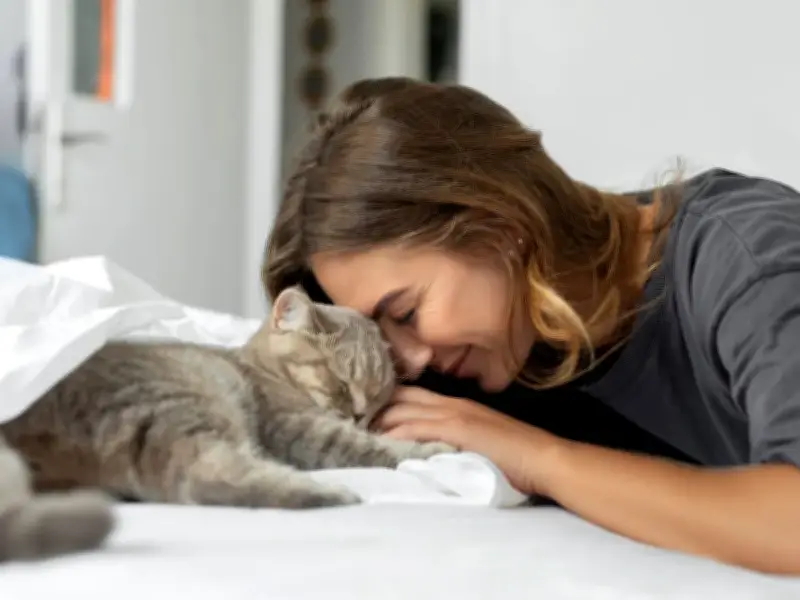
A veterinary expert has warned cat owners that there is a time of day when they should never pay attention to their felines, over concerns that this could negatively affect their behaviour.
Although there are over 15 million dog owners in the UK, there are also around 11 million cat owners who are in the process of trying to train their pets. One such area of training shared between cats and dogs is how to make sure they behave at night, and how human actions can have a big influence on this.
Why night-time strokes are a mistake
Vet Carlos Gutiérrez has warned that if a cat jumps onto the bed and wakes its owner in the middle of the night, then it should not be stroked. The reason for this is because of how cats learn. The expert added that a cat should not think that waking its owner up and being active in the middle of the night is a good thing. If they do, this could reinforce undesired consequences.
Speaking to El Espanol on the issue, Carlos warned: "If your cat keeps you awake at night, never reward it with strokes when it miaows....Never reward them with food, petting, or your attention if they miaow to wake you up."
Gradual change is possible
If an owner is faced with this issue, Carlos reassures people that it is possible to change what their cat does, but that said change will be gradual and happen over time. One such strategy for dealing with this is helping the cat to associate daytime hours with play, activity, and interaction, thus reinforcing desired conduct.
Emphasising the time it will take to alter their pet's actions, Carlos described it as "an adaptation that tends to be slow".
Other expert advice for cat owners
However, Carlos isn't the only animal expert giving recommendations on how people should look after their cats, so too has Sir David Attenborough during his Secret Gardens show, broadcast earlier this year on BBC One. During the series, Sir David highlighted how our gardens were homes, not just for our pets, but an ecosystem "almost as diverse as tropical rainforests".
The veteran television presenter suggested that if someone's cat was outside in this environment, they should fit it with a small bell, so potential prey can hear it coming. He said that such a small change could cut a cat's "hunting success by a third" by simply letting other wildlife know the cat was on the prowl, as he suggested that Britain's cat population was responsible for 55 million bird deaths each year.
Other such ways to help reduce the impact on local wildlife is to keep cats in the house during periods of the day where there would be peak activity, such as dusk and dawn.