
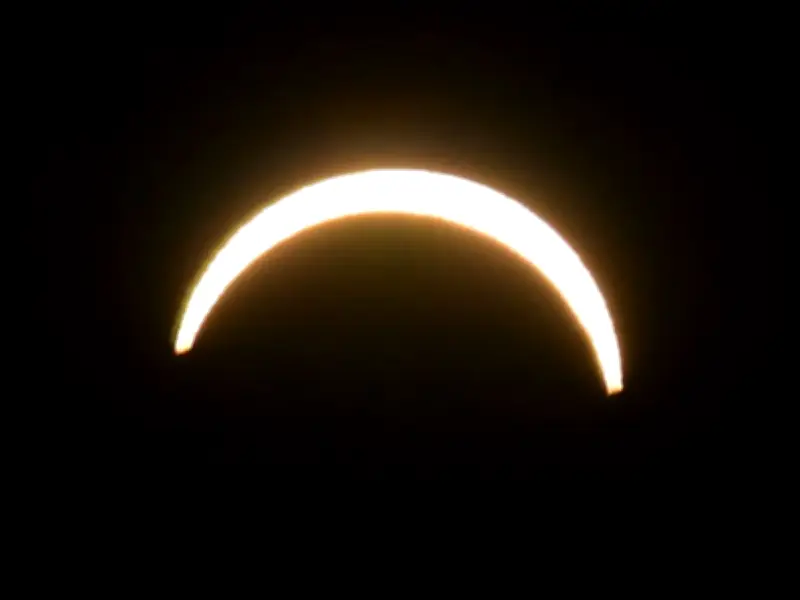
Eye health experts have issued warnings about the risk of solar retinopathy for those who viewed the solar eclipse without proper protection. The Moon passed directly between the Earth and the Sun, creating the most significant eclipse since 1999, visible across the UK and worldwide.
Experts Warn of Eye Damage Risk
Despite being a partial eclipse, specialists caution that staring at it with the naked eye poses a real threat to eye health. Nkosi Yearwood, optometrist and The College of Optometrists council member for Wales, explained that the sun emits more than visible light, including ultraviolet and infrared rays, which are harmful to the eyes.
Yearwood noted that people often assume it is safe to look during dimming, but even with 90% coverage, the remaining 10% of the sun still emits significant energy. Patrick Laidlaw, an optometrist at Optegra Eye Clinic Sheffield, warned that direct viewing can cause damage to the back of the eye and lead to retinopathy, potentially resulting in central field loss.
Symptoms and Historical Evidence
The macula, responsible for central vision, can be burned by intense light, causing toxicity. Yearwood cited historical evidence from the last eclipse in the 1990s, when around 70 people in the UK presented with solar retinopathy, and about 40% had looked at it for less than a minute.
Symptoms may be delayed by hours or days, as the retina lacks pain receptors. Warning signs include blurring, distortion, dark spots, and changes in colour vision. Laidlaw also advised looking out for severe light sensitivity or reduced vision.
Diagnosis and Recovery
Optometrists examine the macular region for changes to retinal cells, often appearing as a yellowish spot. There is no treatment for the damage, but it can heal itself in most cases, similar to sunburn. The healing time and chance of recovery depend on how long the person looked at the eclipse.
Yearwood emphasised that prolonged exposure risks permanent vision damage and urged anyone concerned to visit their local opticians for assessment.




