
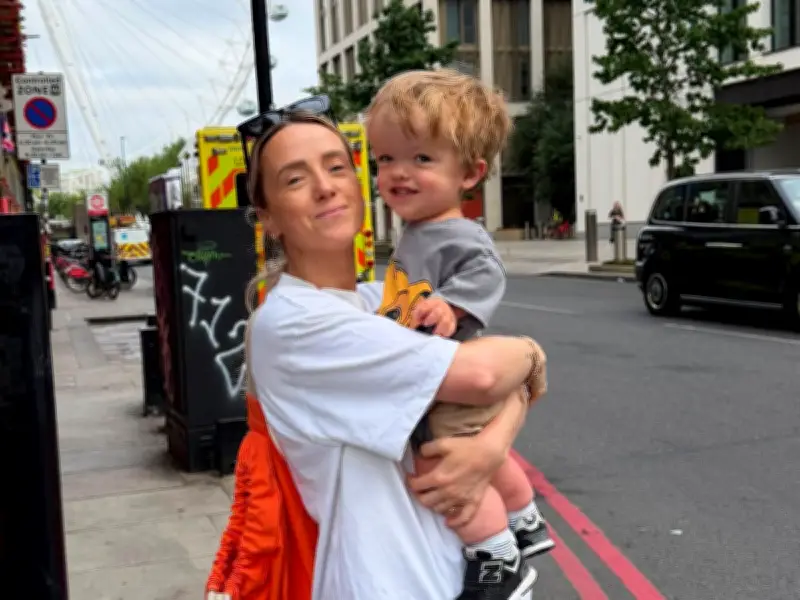
When 36-year-old Rosie Drage was told at her 28-week scan that her unborn son had achondroplasia, she felt completely isolated and terrified for the future. Up until that point, her pregnancy had been smooth, but the sonographer flagged that her baby's femur bones were unusually short, leading to the diagnosis of the most common form of disproportionate short-limbed dwarfism, which affects roughly one in 30,000 births.
“In the 20-week scan, everything was normal, but when I went back at 28 weeks, the scan flagged [an issue] with the femur bones. The kind of journey we thought we would have totally flipped,” Rosie told the Daily Mirror. “We already had a five-year-old daughter, and it just shook up our world. There wasn't a lot of information out there.”
Diagnosis and Isolation
Already feeling vulnerable as an NHS mental health nurse, Rosie was left further shaken by the lack of support and an insensitive remark from a consultant, who said the diagnosis was “just bad luck.” Though the family received an apology, the emotional impact lingered, and they were referred to the Evelina Children's Hospital in London for a “watch and wait” approach until birth.
Seeking answers and reassurance, Rosie turned to social media, which helped change her perspective after she came across former Paralympian champion swimmer Ellie Simmonds OBE on Instagram. At the time, Ellie, who has achondroplasia herself, was working on her documentary Ellie Simmonds: Should I Have Children? which explored the emotions around disability, pregnancy, genetic testing, and whether she herself should have kids.
Finding Support from Ellie Simmonds
After contacting Ellie on Instagram to share her story, Rosie received an instant reply, asking her to meet with the producers. The mum and her fiancé Lloyd were subsequently invited to feature in Ellie's documentary, where they shared their story. “It was amazing to meet her and we've kept in touch,” Rosie said. “She is really helping to bring more awareness.”
In her documentary, the five-time champion grappled with the idea of whether she would have children, adding: “I'm trying to help families and disabled people to feel more content, to feel happy with who they are.” Ellie was given up for adoption by her birth mother at just ten days old after her mother found out she had achondroplasia. Her birth mother recalled a curt doctor handing her a fact sheet stating that children with the condition were perceived to have lower intelligence and traditionally found work in the circus. Describing the situation, she said: “It’s really quite traumatic. It’s hard for you to hear. I don’t want to in any way upset you. You’re making a decision at the wrong time of your life, because you’ve just given birth, your hormones are all over the place. You’re physically not right, you’re mentally not right.”
Life with Achondroplasia
When Arlo arrived, Rosie and Lloyd had to quickly learn how to adapt. Because infants with achondroplasia are born with a curve in their spine and lower muscle tone, they had to learn how to support him. “When he was born, there were a lot of things that we had to do differently,” Rosie said. “You have to keep their back as straight as possible, which means they're not meant to be in a car seat for longer than an hour. The way you hold them changes too, you can't just sit them on your knee, their head control is poor because their heads are slightly larger.”
Arlo's early years have brought health challenges. Due to a smaller ear, nose, and throat system and a smaller chest cavity, he suffered from acute respiratory vulnerabilities. Last September, a severe respiratory illness led to an emergency blue-light transfer from Brighton to the Evelina, where he underwent surgery to remove his adenoids and tonsils. But despite having to undergo physical therapy, speech therapy, and initial delays in learning to walk, Arlo has proven remarkably resilient. Now a thriving toddler, he lights up every room he enters. “He's got the biggest smile in the world, he's cheeky, funny and adores his older sister,” said Rosie. “He loves all of his family and friends and is the most popular VIP at nursery.”
While she acknowledges that occasional reactions from the public—particularly from other children—were hard to navigate at first, she now approaches them with understanding. “We get quite a lot of stares,” she said. “Visually, he is quite different to look at, his head is quite big, his arms and legs are short, so it's particularly kids around his sister Alba's age that will stare. But most of the time, people will look because he is just so cute.”
Helping Other Parents
Reflecting on her journey, Rosie wishes someone had reassured her during pregnancy that things would be okay, adding: “I wish someone had just told me to wait until he was here and I will find my feet.” Determined to ensure no other parent feels as alone as she did, she launched Postnatal Minds—a supportive community and podcast for parents navigating similar diagnoses, as well as on social media under the name @postnatalminds. “It's been quite a healing process,” said Rosie. “I had mums telling me I had saved them. Being that one person at the time they needed it.”
She has also connected with older children and adults with the condition. “I asked one of their mums about bullying and she told me he was never bullied. I think there are things you worry about with their future, but I try and not worry about it.” Looking back on how far her family has come, Rosie’s perspective on Arlo’s diagnosis has transformed completely: “I take each day as it comes. It's very easy as a mother of a child with a disability to find things to worry about.”




