

Deaf Actor Georgia Meacham: A 33-Year Wait for Sign Language
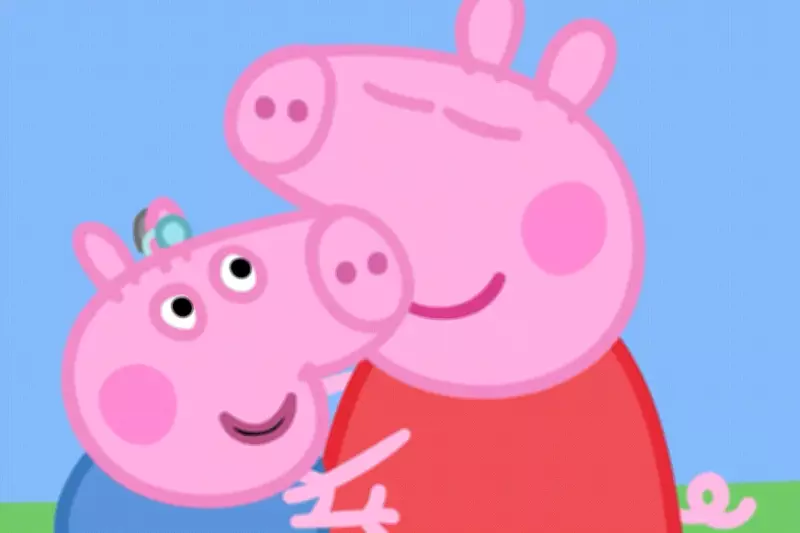
Georgia Meacham, a deaf actor and model, has revealed that it took her 33 years to begin learning British Sign Language (BSL), her own linguistic heritage. This personal milestone coincides with a landmark moment in children's television, as Peppa Pig introduced its first deaf character, George, fitted with a hearing aid earlier this month. For Meacham, this representation sparked strong emotions, but it also underscores the persistent gaps in support for the deaf community across the United Kingdom.
The Stark Reality of Deaf Isolation
Diagnosed with moderate to severe deafness in both ears at 18 months, Meacham grew up in the 1990s without any deaf role models or access to sign language. "Just silence," she recalls. Now 33, she has only recently started learning BSL, a language she believes should have been taught to her as a child. With over 18 million adults in the UK experiencing hearing loss or tinnitus—roughly one in three—early access to sign language and deaf awareness is far from commonplace.
Research indicates that fewer than one in 10 of the at least 50,000 deaf children in the UK use sign language at school. More than 90 percent are born to hearing parents, who often receive minimal information about BSL. Most deaf children attend mainstream schools, where they may be the only deaf pupil, leading to feelings of isolation and exhaustion. "We grow up convinced something is wrong with us—when actually, it's the system that's failing us," Meacham asserts.

A Cultural and Linguistic Minority
Deaf people are not merely a medical group; they represent a linguistic and cultural minority with immense diversity. Some individuals grow up exclusively signing, while others, like Meacham, are raised entirely in hearing environments, creating a complex "in-between" identity rarely depicted in media. Upon entering her first BSL class, Meacham experienced a profound sense of freedom, no longer needing to pretend or rely solely on hearing aids.
Every conversation in her career—from castings to shoots—has demanded immense effort, involving lip-reading and constant requests for repetition. Surprisingly, even in her sign language class, Meacham is the only hard-of-hearing person, surrounded by hearing individuals who have chosen to learn BSL. "I was shocked by this unexpected dynamic," she admits.
Systemic Failures and Personal Struggles
When Meacham's mother received her diagnosis decades ago, sign language was not mentioned. BSL was not officially recognised as a language in the UK until 2003. The prevailing advice focused on hearing aids, speech therapy, and mainstream schooling—essentially urging adaptation to the hearing world. Consequently, Meacham spent her childhood in solitude, the only deaf child in her family and school, missing lunch breaks for speech therapy while peers socialised.
This isolation extended beyond academics, leading to a period of teenage depression where she felt compelled to "fix" herself. Since publicly discussing her deafness two years ago, including appearances on ITV's Good Morning Britain and modelling with visible hearing aids, Meacham has received overwhelming messages from parents of deaf children who face similar struggles. "It breaks my heart that so many children are still enduring what I did," she says.
Challenges in Industries and Advocacy
The fashion and entertainment industries, among others, have significant progress to make. Meacham recounts incidents where photographers attempted to conceal her hearing aids or producers failed to understand basic communication needs. "I'd love people to finally meet me halfway," she emphasises, advocating for basic deaf awareness training in workplaces to prevent daily frustrations.
Authentic representation in TV and film remains lacking, with brands often merely ticking boxes rather than fostering genuine understanding. The government and NHS play a crucial role; families receiving a diagnosis should be informed about all communication options, including BSL, with courses made accessible and affordable.

A Call for Change and Belonging
Reflecting on her journey, Meacham believes that learning sign language as a child would have transformed her life, fostering earlier acceptance of her deafness and connections with deaf friends. "Deaf children shouldn't be made to feel that this world is not for them," she declares. As an ambassador for the Royal National Institute for Deaf People (RNID), she urges politicians, doctors, industries, and society at large to recognise the deaf community not as a problem to fix, but as a proud group that belongs equally.
In summary, Georgia Meacham's story highlights the urgent need for improved access to sign language, better representation, and systemic reforms to support the deaf community in the UK, ensuring that future generations do not face the same barriers she endured.





