
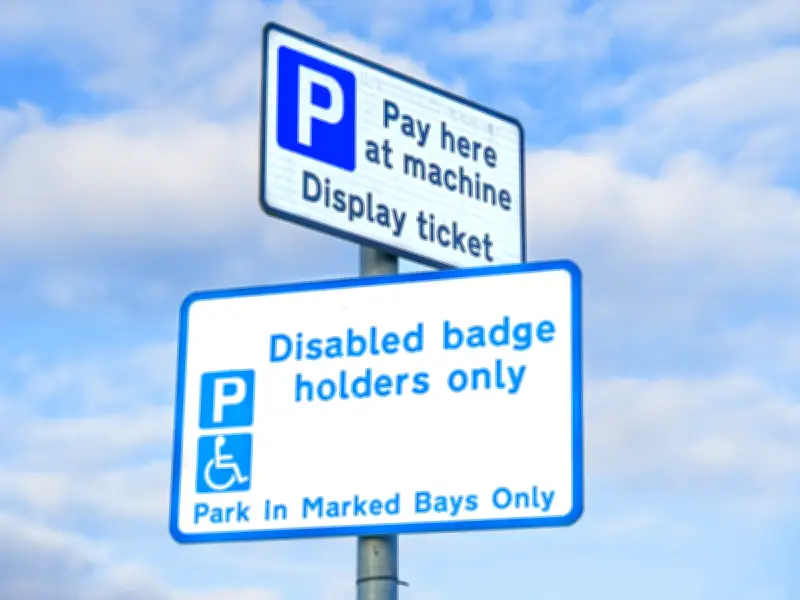
Brits are being warned that their application for a crucial permit could be turned down for various reasons. You should therefore ensure you meet the requirements and complete the application correctly or risk missing out.
Blue Badge Eligibility and Application Process
Around 3.2 million people across Great Britain currently possess a Blue Badge due to mobility needs, enabling them to park nearer to their destinations. A Blue Badge holder travelling as either a driver or passenger can park, often free of charge, in disabled parking bays and may also be exempt from certain other parking restrictions.
As reported by the Daily Record, the UK Government recently confirmed that 90 per cent of all Blue Badge applications are now being lodged through the online service. The initial application is submitted online at either GOV.UK for those living in England and Wales, or MYGOV.SCOT for applicants in Scotland.
The application is then assessed by the claimant's local council, where it can either be processed and granted, or lead to a request for a mobility needs assessment.
Thousands of people apply for a Blue Badge each year, yet many are turned down because they don't meet the eligibility criteria. Here are some of the most frequent reasons Blue Badge applications are rejected.
Your Condition Does Not Meet Mobility Thresholds
Having a medical condition is not enough on its own. Councils assess how it affects your ability to walk, including distance, speed, pain and safety. If you can walk beyond certain limits, you may not qualify.
You Do Not Receive a Qualifying Benefit
Some people qualify automatically if they receive certain disability benefits. If you are not on one of these, you will usually need to apply under the discretionary rules, which are stricter and require more evidence.
Your Medical Evidence Is Not Strong Enough
Applications often fail because there is not enough supporting evidence. This can include missing GP letters, unclear medical reports or a lack of detail about how your condition affects daily life.
You Can Walk but With Difficulty
Many people assume struggling to walk is enough, but the scheme focuses on severe and permanent mobility issues. If you can walk, even with discomfort, you may not meet the threshold.
Your Condition Is Not Considered Permanent
Temporary injuries or short-term conditions may not qualify. Councils usually look for long-term or permanent mobility problems when making decisions.
Your Application Is Incomplete
Missing information is a common reason for rejection. This can include:
- incomplete forms
- missing documents
- unanswered questions
Even small gaps can delay or stop an application.
You Did Not Explain How Your Condition Affects You
Decisions are based on impact, not diagnosis. If you do not clearly explain how your condition affects walking, balance or safety, your application may be refused.
What to Do If Your Application Is Turned Down
Your local council should tell you why you’re not eligible. You can ask them to reconsider their decision if you think they haven’t taken into account some important information.
You can also reapply if your disability or health condition becomes more serious. Taking time to include detailed, relevant information can improve your chances of success.




