

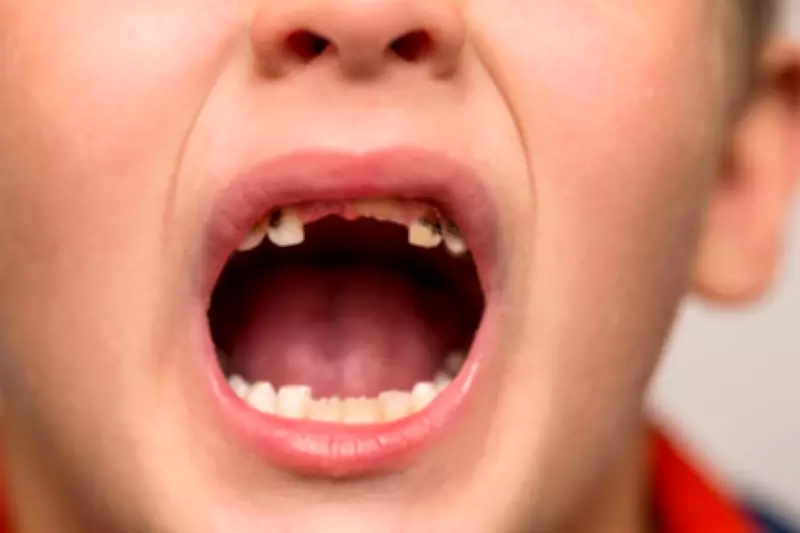
Children's Dental Health Crisis Intensifies with Sharp Rise in Hospital Extractions
Newly released NHS data has exposed a deepening crisis in children's dental health across England, revealing a significant surge in hospital-based tooth extractions. For the financial year ending 2025, NHS hospitals performed 56,143 tooth extractions on patients aged up to 19 years old, representing a stark 14 per cent increase compared to the previous year.
Decay Remains Overwhelming Primary Cause
Of these procedures, a staggering 33,976 were specifically attributed to tooth decay, marking an 11 per cent rise. This means decay is responsible for 60.5 per cent of all extractions within this age group. The figures become even more alarming for younger children, with decay accounting for 80 per cent of extractions in those up to four years old and 86.5 per cent for children aged five to nine.
Tooth decay continues to be the number one reason for hospital admissions among children aged five to nine, highlighting a persistent and severe public health failure.

Geographic and Socioeconomic Disparities Exposed
The data reveals stark regional inequalities. Yorkshire and the Humber recorded the highest rates of decay-related extractions at 504 per 100,000 children up to 19, while the East Midlands had the lowest rates at just 73 per 100,000.
Furthermore, children and young people living in the most deprived communities were more than three times more likely to undergo a tooth extraction due to decay compared to their peers in more affluent areas, underscoring deep-seated health inequalities.
Dental Leaders Issue Stern Warnings
While NHS data experts suggest the rising figures since 2021 may reflect a recovery in services following the pandemic, dental organisations are sounding urgent alarms. The British Dental Association (BDA) insists that much greater effort is required to improve access to dental care.
BDA chairman Eddie Crouch stated: "These horrific statistics are a badge of dishonour for governments past and present. Tooth decay can't go unchallenged as the number one reason for child hospital admissions. Targeted preventive programmes are now in place, but there's still little sign government is willing to rebuild access to care. Dentists can't nip these problems in the bud if we don't get to see them."
Calls for Comprehensive Prevention Strategy
The British Society of Paediatric Dentistry (BSPD) noted that the NHS data likely represents continued recovery of general anaesthetic services post-pandemic and does not include community dental services. BSPD president Dr Oosh Devalia urged policymakers to maintain focus on proven priorities.
"BSPD urges policymakers to keep a steady focus on the priorities that we know will help turn around children's oral health – such as supervised toothbrushing, community water fluoridation and early access to dental teams," Dr Devalia said. She also emphasised the need to reduce sugar consumption for under-16s and ensure every child has a 'dental home' with access to a check-up by their first birthday.
Royal College of Surgeons Highlights Preventable Suffering
The Royal College of Surgeons of England calculated that these figures equate to one young person needing a decay-related extraction, likely under general anaesthetic, every 15 minutes.
Dr Charlotte Eckhardt from the college commented: "No child should be hospitalised for a disease that is almost entirely preventable. Tooth decay is causing unnecessary pain, missed school days and avoidable hospital admissions at a higher rate in 2025 than the year before. This direction of travel must be reversed."
She welcomed evaluation of the supervised toothbrushing scheme as a step toward understanding what works, but stressed that if the Government is to meet its goal of transforming the NHS dental system by 2035, it must ensure every child can see a dentist when needed. "A postcode must never dictate a child's health," she concluded.






