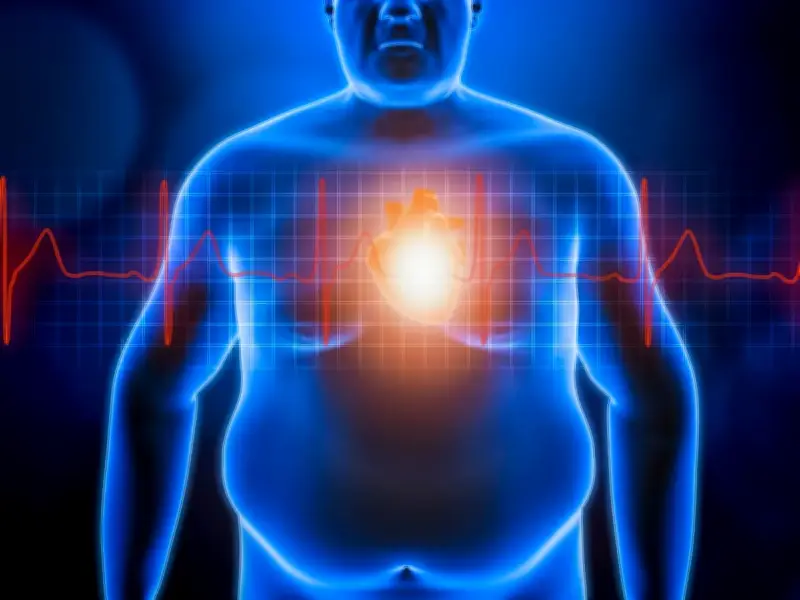
Visceral fat around the abdomen, often called a “beer belly,” is a more important health indicator than BMI, according to new research. A study of 34,000 Brits found that fat stored deep inside the belly is more strongly linked to heart aging and cardiovascular disease than overall body mass index, particularly in men.
Study tracks fat distribution and heart health
Scientists at Queen Mary University of London used UK Biobank data, tracking 56 measures of heart structure and function over five years. They compared visceral fat with subcutaneous fat (under the skin) and epicardial adipose tissue (fat surrounding the heart). The study followed participants for five years after MRI scans measured the three types of body fat.
Visceral fat is packed deep inside the abdomen around organs, often making the belly feel firm or hard. Subcutaneous fat can be pinched on the belly, arms, legs, and hips, and build-up around the hips may be called a “muffin top” or “spare tyre.”

BMI alone misses fat distribution
Researchers found that people with the same BMI could have drastically different fat distributions and heart health risks. BMI, which divides weight by the square of height, shows around two thirds of British adults are overweight or obese. But some with larger frames may be active and healthy yet classified as obese, while others suffer organ problems.
Dr Zahra Raisi-Estabragh, lecturer in Cardiovascular Data Science at the university, said: “Our findings show that not all body fat carries the same risk. Where fat is stored appears to be particularly important for heart health, with fat around the abdominal organs showing the strongest link to accelerated biological ageing of the heart and future cardiovascular disease.”
Visceral fat strongest predictor
Visceral fat was most strongly linked with heart aging and cardiovascular disease. Fat surrounding the heart was also linked to poorer cardiovascular health, but this relationship was largely explained by the amount of visceral fat elsewhere in the body.
Dr Cynthia Maldonado-Garcia, lead author of the study, said: “This research shows that where your body stores fat matters just as much as how much fat you have overall. BMI is useful, but it can't tell us where the fat actually sits. By using MRI scans to see fat location, we can start to explain why some people face higher heart disease risk than others, even when they have the same BMI. In the future, this could help doctors spot high-risk patients more accurately and design prevention plans tailored to the individual.”