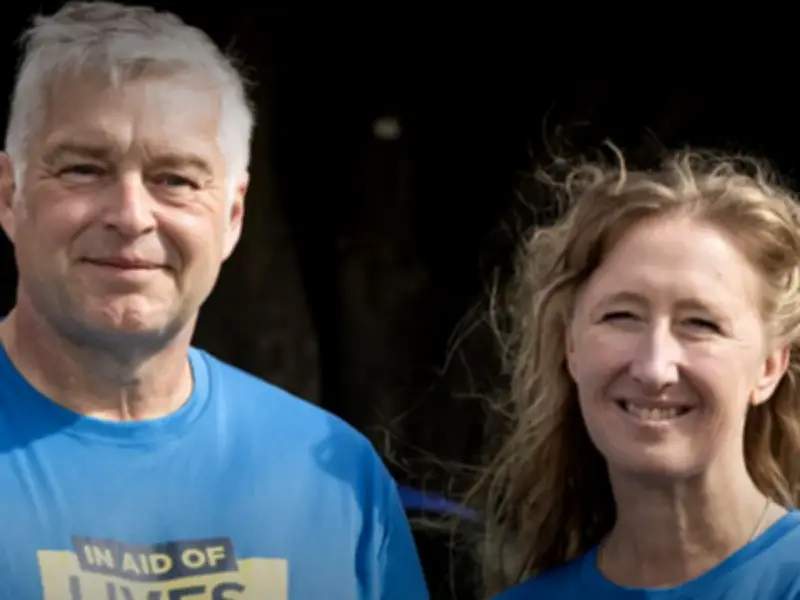
A fit marathon runner who died while watching a medical drama on a Sunday afternoon was brought back to life by his wife, with no memory of the previous five days. Stuart Burgham, 54, was spending a quiet weekend at home with his wife Sarah when his heart suddenly stopped.
Sudden collapse at home
Stuart, a marathon runner, had been for a five-mile run with Sarah on the Sunday morning and was lazing about watching TV in the afternoon. He does not remember any of this; the details were filled in by Sarah after he was revived. Oxygen deprivation to his brain meant he had no memory of anything that had happened over the previous five days.
“I hadn’t had any pain beforehand, according to Sarah. Ironically, we were watching Chicago Med, and she thought I had fallen asleep. My head just went down,” Stuart said. “It became quite apparent quite quickly that it was more serious because I started drooling, in her words, and I got the death rattle.”
Quick response and resuscitation
Sarah reacted immediately, dialling 999 and starting CPR. Because they live in a rural area, volunteers from the first responder charity LIVES were called to the scene. They arrived within ten minutes and took over from Sarah, using a defibrillator. An ambulance soon arrived, followed by an air ambulance carrying an emergency doctor. They took him into the front garden where there was more room to work, and after 25 minutes, Stuart's heart was restarted. He was intubated, placed into a coma and taken to hospital.
“It makes quite grim viewing on the Ring camera. Looking back over it, it feels very surreal as well. It could be anybody on there. I could see a person, surrounded by people. Blue lights in the street. It was very dissociative. It didn’t feel like me. It could have been anyone - it could have been a CPR training dummy. It was weird,” Stuart said.
Recovery and diagnosis
Stuart woke up in hospital with no memory of the event. “I knew nothing of it. I didn't see any bright lights or any sort of relatives waiting for me or anything. I was just gone.” The following day, he suffered further cardiac arrests in intensive care, but by Thursday he had been brought out of the coma. “They explained what had happened, which was really quite surreal because, whilst I was groggy, I felt like I’d just had a really good sleep. If it hadn't been for all the tubes and bits, I wouldn't have known that I'd passed away. That was comforting in some sort of way.”
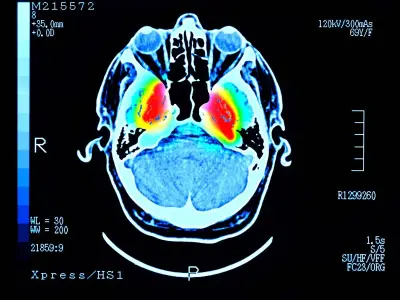
Stuart was kept in hospital for another 10 days while doctors carried out tests to establish what had happened. “They did MRIs, CAT scans, stress tests, and they could not find anything wrong with my heart at all. It was just an electrical signal from my brain to my heart that just stopped,” he said. He was fitted with an implantable cardioverter defibrillator (ICD), which will deliver an electric shock to his heart if it detects a dangerous abnormal rhythm. The procedure was successful and Stuart was discharged the following day.
Psychological impact and fundraising
As he recovered at home in Woodhall Spa, Lincolnshire, both Stuart and Sarah struggled with the psychological impact of their ordeal. Stuart has since been diagnosed with complex PTSD, which may also be linked to unresolved trauma from tours of Iraq and Afghanistan while serving with the RAF. He found that returning to gentle running was a huge help. Two weeks ago, after seeking advice from his cardiologist, he ran the Lincoln Half Marathon to raise money for LIVES.
Stuart wants everyone to learn CPR. “It can be exhausting and traumatic, but it's so important. You never think you will need to use it on your loved one on the couch on a Sunday night,” he said. Two months ago, he returned to work as a clerk in RAF Coningsby's Training and Development Flight. One of the first things he did when he came home from hospital was sit back on his side of the sofa and finish watching that episode of Chicago Med. “It was alright. It wasn’t the best,” he adds.