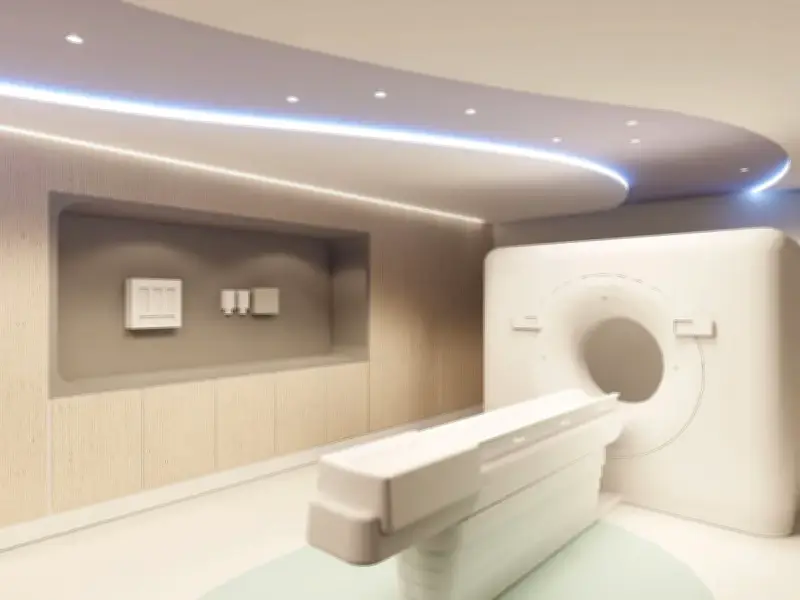
The Christie hospital in Manchester is preparing to introduce a pioneering 4D CT scanner that combines traditional CT imaging with video X-ray, allowing doctors to see and treat cancer tumours simultaneously. The hospital says it will be the first machine of its kind at the facility, and according to Dr Pavan Najran, Consultant Clinical and Interventional Radiologist at The Christie, it will be the "first in the UK" to adopt this technology.
How the 4D scanner works
A conventional CT scanner creates detailed three-dimensional images of structures inside the body. The new machine adds another dimension by combining CT scanning with video X-ray, and crucially, the two technologies can be used together during a procedure.
For patients in the North West, this would mean access to the technology without travelling abroad or elsewhere in Europe, which Dr Najran says is part of maintaining The Christie's position at the forefront of cancer care. According to Dr Najran, the technology could make existing treatments more accurate and allow doctors to offer procedures that are not currently possible.
As an interventional radiologist, he carries out minimally invasive procedures, using imaging to guide tiny needles, wires and catheters through the body. Currently, X-ray is used to guide those instruments. The 4D scanner would allow CT imaging to be brought into the procedure as well, enabling doctors to check precisely where they are and where the tumour is while treatment is taking place.
Potential impact on treatment and trials
"That enables me to do a number of things," Dr Najran said. "Number one, I can be very confident I'm in the tumour. Number two, I can be very precise to my target, because at the moment, I'm basing it on X-ray images. And number three, it actually broadens the type of procedures we can do."
Scans at The Christie "underpin the entire treatment journey" for cancer patients, Dr Najran says. They can establish where cancer is in the body before treatment begins, while further imaging can show whether that treatment has worked. He said the scanner could make procedures already carried out at The Christie "far more accurate" and broaden the range of procedures available to patients.
The technology could also open up new opportunities for clinical trials. "With equipment like this, we can actually start opening up more trials for patients, providing therapeutic options for people who normally will not have that option," he added.
Redevelopment and future-proofing
The machine will form part of a major redevelopment of the hospital's scanning centre. The Christie Charity is raising the £42.5 million needed to turn the ambitious project into reality, in a joint appeal with the Manchester Evening News.
Currently, the existing scanning department is operating in a space designed for a fraction of the patients it sees today. Dr Najran said: "The staff work extremely hard to try and make it as streamlined a process for the patient, but they are limited by the infrastructure that's currently there. It was built a very long time ago and only really designed to cater for a quarter of the number of the patients that are coming through at the moment."
He said the number of patients needing scans was likely to continue growing. "We need to really not only catch up with where we are at the moment, but actually future-proof," Dr Najran explained. "We need to make it bigger, enabling more patients to be treated appropriately."
He added: "The care that is currently being provided at the Christie is above and beyond what's currently available, so we are already making new ground, implementing new technologies." For a hospital already treating patients from across the country, the ambition is to ensure the technology - and the environment around it - keeps up with that demand.