Marwell Zoo Implements Fruity Strategy to Recapture Escaped Capybara
Zookeepers at Marwell Zoo in Hampshire have devised an ingenious plan involving melon to lure back an escaped capybara after nine days on the run. The giant rodent, named Samba, remains at large despite extensive search efforts, prompting the deployment of humane badger traps baited with fruit along riverbanks in the nearby village of Twyford.
Decoy Operation Targets Last Known Sighting Areas
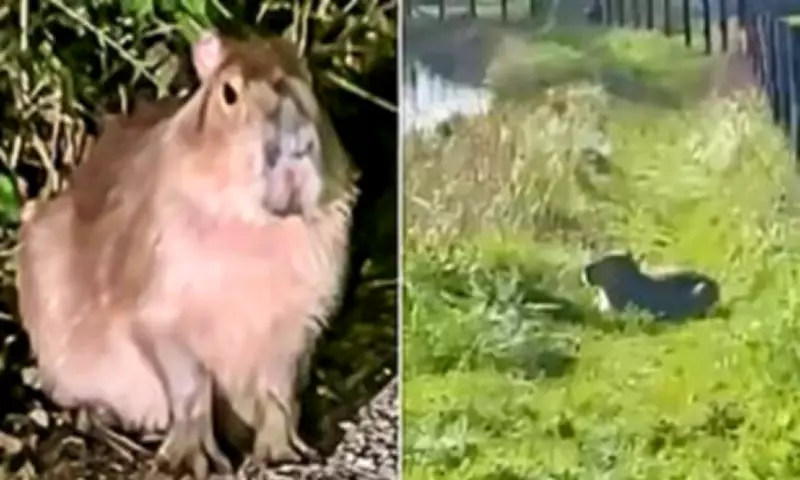
The zoo has secured necessary permissions to place traps containing melon in strategic locations where Samba has been sighted, particularly along the River Itchen where she was last observed sunning herself. This marks day ten of the search operation for the female capybara, who escaped alongside another named Tango on March 16, just one day after arriving at the zoo from Jimmy's Farm and Wildlife Park in Ipswich.
While Tango was quickly recovered from nearby bushes, Samba has proven more elusive, with only sporadic sightings reported by local residents. The zoo believes both animals squeezed under a low gate in an off-show area to make their escape.

Local Resident's Unusual Encounter
Claudie Paddick, a family lawyer walking her dog along the riverbank, initially mistook Samba for a beaver or injured deer before realizing she was witnessing something extraordinary. "It then jumped in the river and it didn't come back out and I was like what the hell is that?" she recounted. "It was something I had never seen before."
After her neighbor identified the animal as a capybara and contacted Marwell Zoo, Paddick became an unexpected participant in the search effort. "I'm absolutely going to go and visit her if and when she is taken back to Marwell Zoo," she said, expressing both concern and fascination with the unusual visitor to her local waterways.
Comprehensive Search Strategy Deployed
The zoo has implemented multiple approaches to locate the missing rodent:
- Additional camera traps placed throughout the suspected area
- Thermal drone technology to detect heat signatures
- Specialist teams walking waterways daily
- 24-hour hotline for public sightings (07436 167401)
- Standby response teams ready for immediate deployment
A zoo spokesperson explained: "We do believe she is still in the same area, but that area is large with a lot of water so she could be tucked into a riverbed and not easily visible." The search team requests that anyone spotting Samba provide photographic evidence along with precise location details using either Google Maps pins or What3Words coordinates.
Public Urged to Exercise Caution
Laura Read, CEO of Marwell Zoo, emphasized important safety guidelines for local residents: "Although we're asking locals for help looking out for Samba, we would urge people from outside the area not to travel in to search for her. Please don't approach Samba or disturb the area around her as she may get stressed."
Capybaras, native to South America, are the world's largest rodents, weighing up to 80kg and measuring 1.7 meters in length. Their affinity for water makes riverbanks, ponds, and damp environments likely hiding places. The zoo notes that Samba is more likely to travel at night, advising drivers to exercise particular caution after sunset.
The zoo has launched an internal review to understand how the escape occurred and prevent similar incidents in the future. Meanwhile, the search continues with renewed determination as zookeepers hope their melon-baited traps will finally bring the adventurous capybara safely home.