Wildwood Trust Director Questions Wolf Captivity After Pack Euthanisation
The director of a prominent UK wildlife park has raised profound questions about keeping wolves in captivity following the heartbreaking decision to euthanise an entire pack. Wildwood Trust, located near Canterbury, made the difficult choice to put down five wolves on Wednesday after aggression levels reportedly 'exploded' within the group, leading to violent fights that left two animals with life-threatening injuries.
Unexpected Aggression Leads to Tragic Outcome
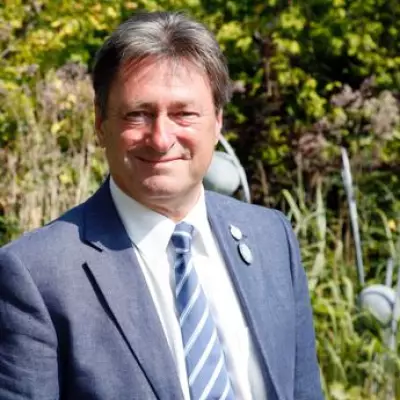
Paul Whitfield, Director General of Wildwood Trust, described how the situation deteriorated rapidly. 'A few weeks ago, the level of aggression within the pack really exploded, completely unexpectedly,' he explained. 'It went from a harmonious pack to animals that were just fighting each other and causing each other quite serious harm. It was really distressing for everyone to see it, and for the animals.'
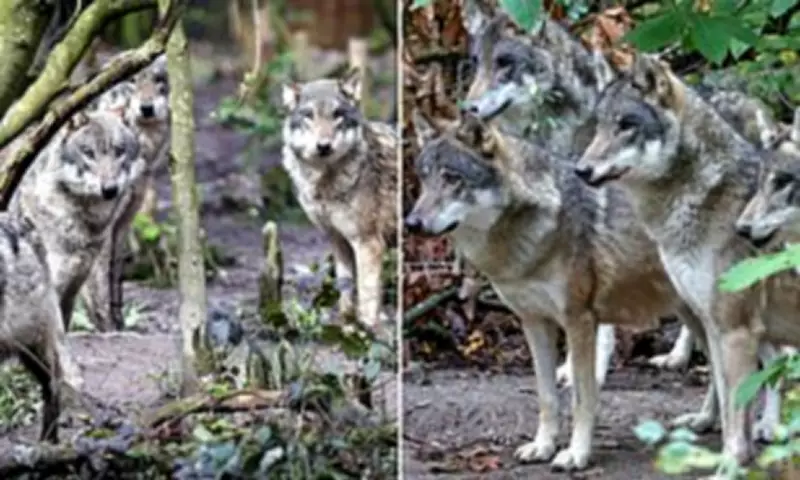
The wolves - named Odin, Nuna, Minimus, Tiberius and Maximus - had been kept at the park for several years as part of educational efforts to help visitors understand native British wildlife. However, after two wolves suffered life-threatening injuries, the park consulted external experts and determined that euthanasia represented 'the only thing' they could do to prevent further suffering.

The Difficult Decision Process
'If nothing was done to intervene, the wolves would eventually kill each other, which was a really horrible and worrying situation,' Whitfield added. 'Because the pack had broken down to the point it had, if we were to euthanise those two animals and then leave the other three, those three would just continue to fight in the same way.'
The director described the decision as heartbreaking, noting it was 'absolutely the last thing that anyone wanted to do.' He emphasized that the park had been transparent about the incident, stating: 'We didn't want at all to cover this up or hide what has happened. It's an awful situation and we wanted to be very frank about what had happened.'
Broader Questions About Captivity
The incident has prompted serious reflection about whether wolves should be kept in captivity at all. 'The truth is, they're not an easy animal to keep in captivity,' Whitfield acknowledged. 'They are a complex social group and if people are going to keep them, they really need to understand that and talk to experts about that.'
Wildwood Trust will now review its policy on keeping wolves, with Whitfield questioning whether the educational benefits outweigh the risks. 'That's exactly what we're going to review,' he said. 'Until this event, we've been very good at managing wolves successfully and they've been a really important part of the way we've been able to educate people. But given that this has happened, I think that we need to review that.'
Animal Welfare Organisations Respond
The euthanisation has drawn strong reactions from animal welfare organisations. Chris Lewis, Born Free's Captivity Research and Policy Manager, described it as a 'disastrous situation' and argued it demonstrates why species with complex social structures should never be kept in captivity for public entertainment.
'It is almost impossible to maintain the complex and hierarchical social groups of species such as wolves in captivity, which have nowhere to escape from conflict,' Lewis stated. Elisa Allen, vice-president of the Peta Foundation, added: 'These wolves did not belong in captivity, where their ability to spread out and form agreeable social groups is restricted to the point of causing them harm and, in this case, costing their very lives.'
However, Richard Morley, director of the Wolves and Humans Foundation, offered a different perspective, noting that captive wolves 'contribute significantly' to education and support conservation efforts. 'If we hope to have wolves back in the UK one day, it is important that people can see them in the flesh and learn more about them,' he argued.

Public Reaction and Future Implications
The public response has been overwhelmingly emotional, with many expressing sadness and questioning the ethics of keeping wild animals in captivity. Social media comments reflected deep concern, with one person stating it was 'an example of why wild animals should not be kept in captivity' and another noting that 'in the wild they would at least be able to get away.'
Previous visitors to Wildwood Trust expressed particular distress, with one writing: 'Very upsetting. This means there is not enough room for the wolves to thrive. Hopefully you won't bring any more wolves to "amuse" your paying visitors.' Another added: 'This is a heartbreaking outcome that highlights why I don't believe any animals, especially a pack, should be kept in cages.'
As Wildwood Trust conducts its review, the incident has sparked broader conversations about animal welfare, conservation ethics, and whether educational benefits justify keeping complex social animals in confined spaces. The park's future decisions regarding wolf captivity will likely influence similar institutions across the country.