Urban Coyotes Display Greater Boldness and Risk-Taking Than Rural Packs
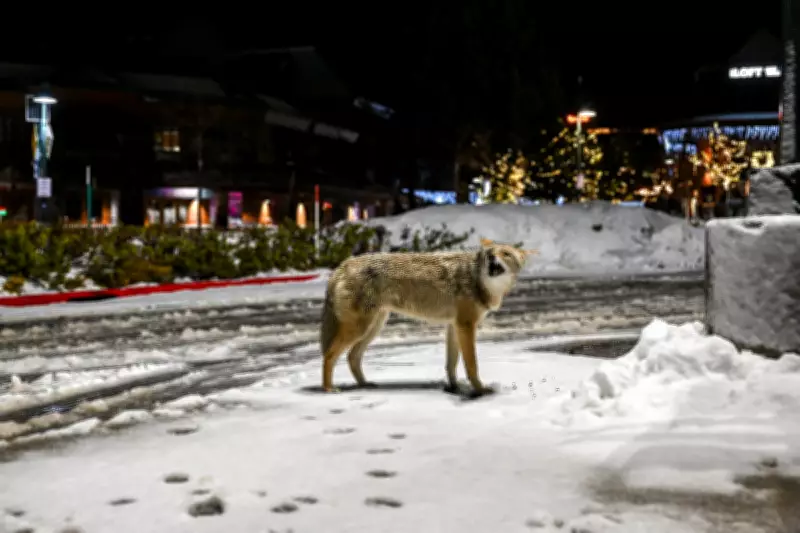
A new scientific investigation has uncovered a striking behavioural divide between coyotes inhabiting American cities and those living in rural landscapes. The research, conducted across numerous sites nationwide, demonstrates that urban coyotes are markedly less fearful of unfamiliar objects and experiences.
Nationwide Study Reveals Consistent Behavioural Patterns
Biologist Javier Monzón from Pepperdine University in Malibu, California, who co-authored the study, explains the findings. "Urban coyotes nationwide take more risks compared to those coyotes in rural areas," Monzón states. "That doesn't mean that they are more aggressive, it just means that they're less afraid of unfamiliar stimuli."
The research represents the first examination of urban versus rural coyote behaviour across such an extensive geographical scope. Scientists established 623 monitoring stations at 16 paired sites throughout the United States to gather comprehensive data.

Methodology and Findings
The research team employed innovative techniques to measure coyote reactions:
- Camera trap stations triggered by warm-bodied animals
- Novel structures with four posts and string placed at half the sites
- Meat bait and scent tabs to attract animals to testing areas
The results showed urban coyotes in western regions spent approximately four seconds longer near bait areas than their rural counterparts. Researchers attribute this behavioural gap to reduced fear of harassment in urban environments, where recreational hunting is typically prohibited and direct human threats are fewer.
Coyote Adaptation and Urban Expansion
While coyotes have inhabited western North America for millennia, recent decades have witnessed their dramatic expansion across the continent. This proliferation results from diminished predator populations and abundant food sources in human-altered landscapes.
Wildlife ecologist Niamh Quinn of the University of California Division of Agriculture and Natural Resources notes, "Coyotes are ridiculously adaptable. They just conduct their daily business of being coyotes among us, and really don't pay that much attention to us any more."
Coyote populations are surging in urban areas throughout the United States. A 2016 survey detected coyotes in 96 of 105 examined cities, presenting communities with new challenges regarding predator management in residential neighborhoods.
Management Implications and Research Questions
The study's findings may assist municipal authorities in developing more effective wildlife management strategies. Since behavioural patterns proved consistent across different urban environments, management techniques successful in one location may prove transferable to others.
Quinn highlights a crucial research question regarding hazing techniques—methods intended to make coyotes uncomfortable around humans through shouting, arm-waving, or noisemakers. "You could haze a coyote and it could just look at you, and if it had a middle finger, it would essentially raise it," she observes. "Or you could haze a coyote and it could put its tail between its legs and not look back."
To investigate hazing effectiveness, Quinn is conducting experiments involving captured coyotes fitted with tracking collars. Researchers will haze half the subjects and monitor subsequent spatial behaviour changes to determine if urban coyotes begin behaving more like their rural counterparts.
Broader Implications for Urban Wildlife
The study raises important questions about urban influences on animal behaviour across species. Monzón notes similar patterns in other urban wildlife, including ravens seemingly unfazed by busy Los Angeles traffic and squirrels displaying reduced fear of humans.
A fundamental question remains unanswered regarding coyote behavioural changes. "What we don't know is if this change is due to habituation," Monzón explains, "or if it's due to evolution, like a genetic adaptation, to be bolder."
The research findings were published in the journal Scientific Reports in December 2025, contributing valuable insights to our understanding of wildlife adaptation in increasingly urbanized environments.