
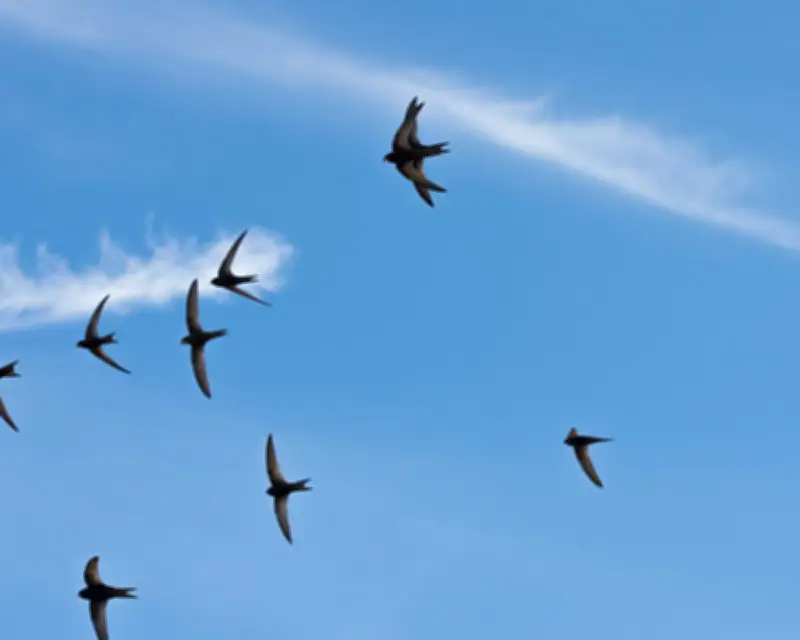
A 15-year study by the RSPB has revealed that migratory swifts show remarkable loyalty to their nesting sites, with 94% of birds returning to the same nest each year. The research, conducted in the Devon village of Drewsteignton, tracked 190 swifts across 243 nests and underscores the critical need to protect nesting sites for this red-listed species, which has declined by 70% since 1995.
Study Details and Key Findings
Scientists monitored swifts breeding in nest boxes over 15 years, identifying birds using uniquely numbered leg rings. They found that 94% of swifts reused the same nesting site annually, while only 59% paired with the same partner. Nest camera footage captured fierce debates over nest box occupancy. The species, known for its screaming summer parties over towns, faces severe threats from the loss of traditional nesting sites in buildings due to renovations and insulation improvements.
Conservation Implications
Malcolm Burgess, principal conservation scientist for the RSPB, stated: 'We've anecdotally thought for a long time that swifts are loyal, returning to the same nesting sites and partners each spring. But for the first time, we've documented just how strongly faithful they are to their nest sites, which highlights just how important it is to protect their nesting sites in our neighbourhoods.' He warned that without increasing nest site availability and replacing lost ones, further declines are inevitable.
Policy Response and Campaigns
Scotland has made swift bricks—simple hollow bricks costing £35—a legal requirement in new buildings. However, the English government has repeatedly refused to mandate them. Naturalist Hannah Bourne-Taylor led a four-year campaign for mandatory swift bricks in new homes, succeeding in Scotland but facing a reversal of support from the Labour government in England. In Derbyshire, Network Rail reopened blocked holes in a railway viaduct after local outcry, while swifts in Dorking, Surrey, found their ancestral home demolished during nesting season.
Swift Awareness Week and Community Action
The study was published ahead of UK Swift Awareness Week, featuring over 150 local swift groups hosting events from Aberdeen to Devon. Coordinator Nick Brown noted that this year's heatwave may cause swiftlets to overheat and fall from nests, requiring rescue by volunteers. He said: 'The numbers of swift groups and events keeps growing. The interest and enthusiasm and care for swifts is growing exponentially. Every year more people get involved and take action.' Brown emphasized that while government support lags, community efforts are expanding rapidly.




