
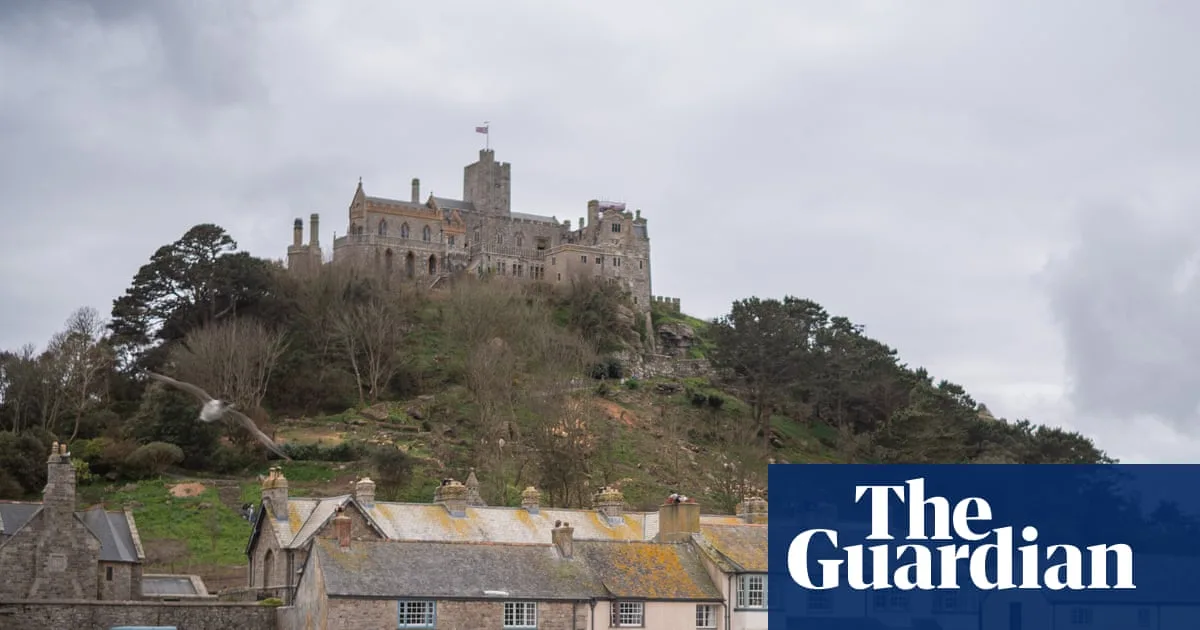
Three months after Storm Goretti battered St Michael's Mount in Cornwall, the scars left by uprooted trees and piles of logs remain evident. Islanders who have lived there for decades say they have never seen anything like it. The storm's 100mph winds destroyed 80% of the tidal island's tree cover, including Monterey pines that had grown to the height of a four-storey building.
Senior gardener Jack Beesley described the aftermath as shocking and sad, noting that the team had cared for the trees for years. While efforts have been made to prepare the site for Easter visitors, Beesley said it will be another month or more before everything is back to normal. The gardening team is now considering whether to replant trees, given the threat of more frequent storms due to the climate emergency. 'There's also an opportunity to adapt, do things differently,' Beesley said.
Ian Marsh, the National Trust's assistant director for the south-west, said thousands of trees fell across west Cornwall. He agreed that decisions must be made on where to replant and where to let nature regenerate naturally. 'It can be good to get more light into wood... but you probably wouldn't wish for it in quite this extreme a way,' he said.
The storm also brought down power cables, leaving many without lighting, heating, or communication. Bridget Wagstaffe and her two children have moved into their fourth temporary home after a tree smashed into their cottage in Goldsithney. 'It has been traumatic, to say the least,' said Wagstaffe, who is dealing with insurance claims, builders, and bills. They may not return home until late summer. The family also received a note from Cornwall council suggesting they may be liable for emergency work costs, which Wagstaffe called 'a slap in the face' as the tree was not theirs.
In Madron, 86-year-old Madge Christopher was without electricity for 45 hours, enduring no heating, hot drinks, or light. Hannah Derrington and her family lived in candlelight for four days, with no heating or internet. Councillor Juliet Line said many residents are seeking compensation for the outage, but some have been told they are ineligible because their electricity flickered back on briefly. A National Grid spokesperson said final claims are being processed, with payments applying only to those without power for more than 48 hours under Ofgem rules.




