
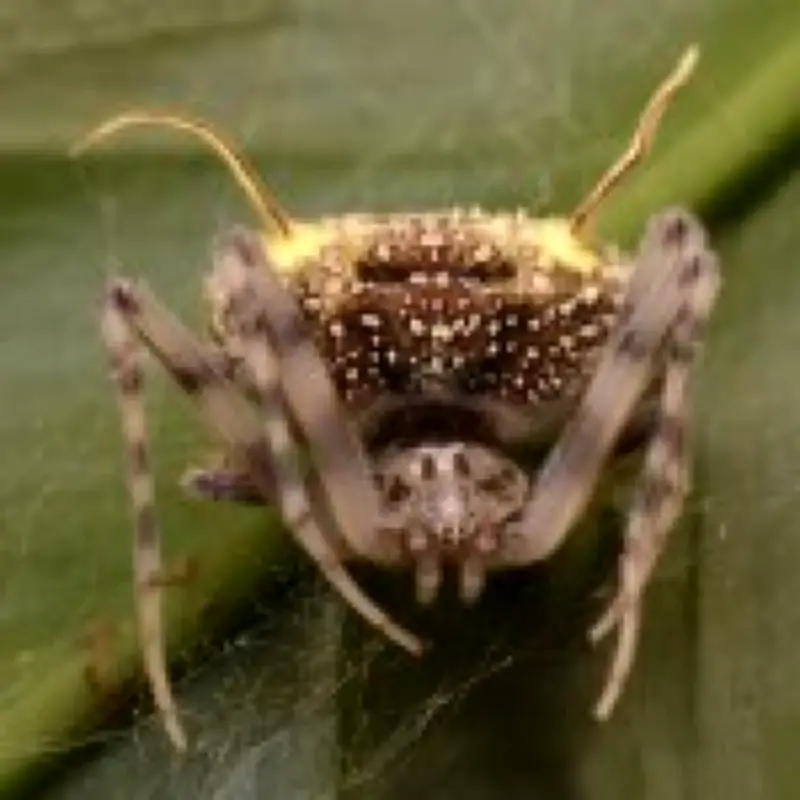
A newly discovered spider in the Amazon rainforest disguises itself as a parasitic fungus, reminiscent of the plot in the video game and TV series The Last of Us. Researchers have named the species Taczanowskia waska, marking the first known example of a spider mimicking a parasitic fungus that infects spiders.
Discovery in Ecuador's Biodiversity Hotspot
The spider was found in the Llanganates-Sangay Corridor in Ecuador, one of the most biodiverse regions on Earth. During a night-time expedition, researchers initially mistook the creature for a mushroom due to its convincing camouflage. The spider resembles the fruiting body of a fungus from the genus Gibellula, which infects spiders and takes over their nervous system.
It features elongated structures on its abdomen and a pale surface that closely mimic fungal growth. The spider remains motionless on the underside of leaves, the same location where the fungus is commonly found.
Evolutionary Adaptation for Survival
Scientists believe this combination of appearance and behavior evolved to help the spider avoid predators and improve its chances of catching prey. By blending into its surroundings and appearing as an unremarkable object, the spider is less likely to be detected and can more easily ambush unsuspecting insects.
According to the researchers, this is the first documented case of a spider mimicking a parasitic fungus that infects members of its own group. The finding offers fresh insight into the evolution of mimicry and the ecological role such adaptations can play.
Rare Genus and Citizen Science Role
The genus Taczanowskia is considered rare and poorly understood. Researchers say much of its ecology remains unknown because these spiders are seldom encountered in the wild. Among those involved in the study was Nadine Dupérré of the Museum of Nature Hamburg at LIB, who examined reference specimens from scientific collections and helped classify the new species.
The discovery began with an observation posted on the citizen science platform iNaturalist. Users initially debated whether the organism was a mushroom before identifying it as a spider, prompting further scientific investigation. Researchers say the case highlights the growing importance of citizen science in biodiversity research.
“Finds like these demonstrate the value of scientific collections. They enable us to classify new species and compare them with historical specimens. Combined with international collaboration and citizen science, this opens up new opportunities for researching biodiversity,” explains Nadine Dupérré.
Implications for Biodiversity Research
Scientists say the discovery underlines both the extraordinary biodiversity of tropical ecosystems and how much remains to be explored. It also demonstrates the importance of international collaboration and new sources of data in helping researchers better understand global biodiversity. The findings have been published in the scientific journal Zootaxa.




