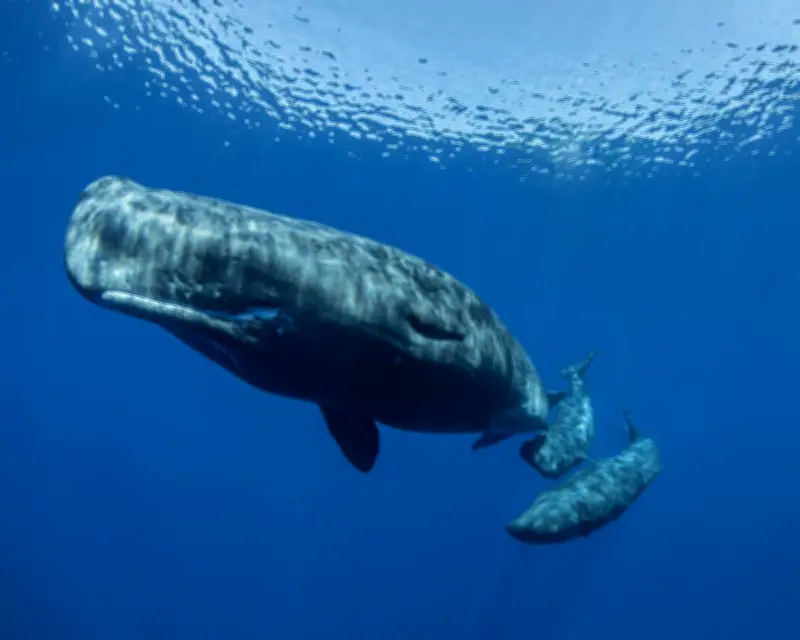
Sperm whales in the Mediterranean Sea communicate using distinct dialects depending on whether they reside in the eastern or western basin, according to a new study. The research, published in Proceedings of the Royal Society B, analyzed recordings of sperm whale vocalizations made over 112 days between 2003 and 2021.
Two Distinct Dialects Identified
Sperm whales produce sequences of short clicks called codas, with rhythmic patterns forming dialects unique to matriarchal groups. The study found that whales in the western Mediterranean, near the Balearic Islands, favored a 3+1 coda pattern: three regularly spaced clicks followed by a longer pause and then a final click. In contrast, whales in the eastern Mediterranean, around the Hellenic Trench near Greece, used a faster version of the same coda type.
“The dialect is used to form social structures, within which these animals will cooperate,” said Dr. Luke Rendell of the University of St Andrews, a co-author of the study. He drew parallels to human behavior, noting that people might be more comfortable conversing with someone who sounds similar.
Implications for Dialect Evolution
The findings offer rare insight into how sperm whale dialects originate. The researchers suggest that sperm whales first colonized the western Mediterranean basin before spreading eastward, where they developed a faster dialect over time. “The whales in the east remember the old ways, but they’re moving on and they’ve got a slightly different version of what is clearly the same [general type of coda], but they’ve evolved it a little bit; they’ve changed it,” Rendell explained.
Genetic studies indicate that Mediterranean sperm whales have been isolated from other sperm whale populations for about 20,000 years, with restricted mating between eastern and western groups despite occasional movements between basins.
Cultural Evolution Parallels
The slow rate of dialect change observed suggests that some level of isolation is necessary for new dialects to emerge, a process also seen in human languages and birdsong. “This is the first example we’ve got where we can look at a snapshot and think: ‘Oh, this seems to be telling us about how new dialects come about’,” Rendell said. “We just knew there were these different dialects, but we’ve never seen the origin or had any clues into the origin of them.”
The Mediterranean sperm whale population is small and endangered, numbering only a few thousand individuals. Understanding their communication and social structures may aid conservation efforts.