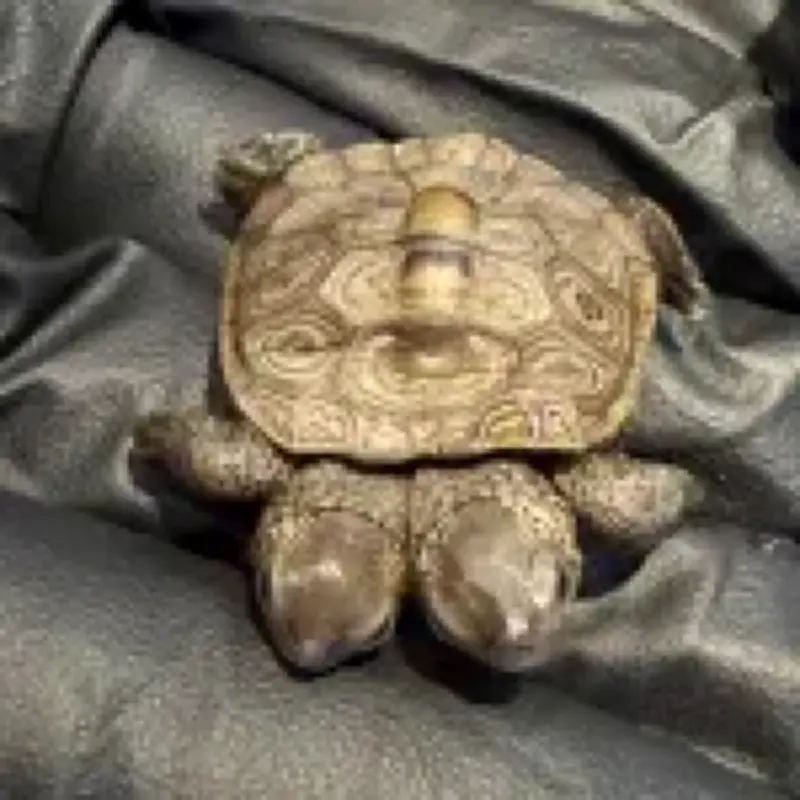
A rare baby turtle with two heads, and seemingly two distinct personalities, has been discovered at a protected nesting site in Wellfleet on Cape Cod, Massachusetts, in the US.
The tiny diamondback terrapin weighs just 5.2 grammes. Despite having two fully formed heads, the youngster is said to be swimming and eating normally.
Discovery and condition
The turtle was found by the Mass Audubon Wellfleet Bay Wildlife Sanctuary and taken to the Cape Wildlife Center in nearby Barnstable. It has a condition known as bicephaly, where an animal develops two heads on a single body.
Experts say the condition can occur when an embryo begins dividing to form twins but fails to separate completely. Bicephalic animals can have dramatically different internal structures depending on how far the embryo divided during development.
Monitoring and personalities
Vets are closely monitoring the turtle as they try to understand how its unusual anatomy works. Although the hatchling weighs little more than a nickel, it already appears to have two distinct personalities.
Zak Mertz, CEO of New England Wildlife Centers, said the left head seems to have the 'bigger personality'. The centre has only treated two other bicephalic turtles in the past five years.
Staff said: 'While we've encountered this unusual condition before, every case gives us another opportunity to learn more about these fascinating animals' anatomy and physiology. For now, our team is monitoring this little one's (two's?) appetite, growth, and behavior closely.'
Future examinations
Both heads are functional and the turtle currently appears healthy, but its internal anatomy remains something of a mystery. As the youngster grows, vets hope to carry out further examinations, including X-rays and CT scans, to see how its organs are arranged and shared between the two sides.
Diamondback terrapins are found in coastal salt marshes and estuaries and are considered a threatened species in Massachusetts. It is not yet known whether the unusual youngster will eventually be able to survive in the wild.