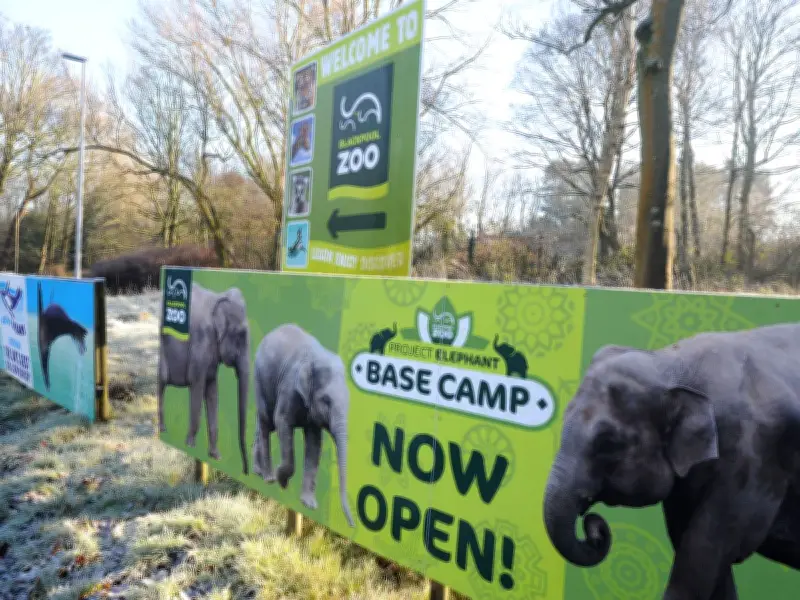
Blackpool Zoo, located just over an hour's drive from Liverpool, has announced the successful rearing of three critically endangered Blue-crowned laughingthrush chicks. This marks only the second time this rare bird species has hatched at the zoo, providing a significant boost to global conservation efforts.
A Milestone for Species Survival
The Blue-crowned laughingthrush is one of the most endangered birds on the planet. It is estimated that only between 50 and 249 individuals remain in the wild, with an additional 313 living in zoos and conservation collections worldwide. In the past year, only 48 chicks have been successfully hatched globally. The three new chicks represent a vital addition to the population.
Parental Care and Development
The chicks' parents, Rupert and Melody, shared incubation duties over a 14-day period before the chicks hatched on Saturday, April 25. Since then, the pair have worked together diligently to rear their young. Despite their small size, Blue-crowned laughingthrushes are known for their powerful voices. Visitors to the zoo have been captivated by the fledglings' distinctive and beautiful song, which can often be heard throughout their aviary.
Conservation Efforts and Collaboration
Luke Forster, Deputy Section Head at Blackpool Zoo, emphasized the importance of the chicks: "These stunning birds are some of the most endangered on the planet, and the three chicks will play a critical role in the survival of their species. All work carried out in zoos and collections across the world will help our colleagues working tirelessly on in-situ conservation programmes."
Forster added: "With a total population of less than one thousand individuals, they are in real danger of becoming extinct due to excessive and strongly culturally rooted consumption of wild songbirds for trade, competitions, pets, export, traditional medicine and food. We introduced the Blue-crowned laughingthrush, along with several other species of highly endangered songbirds, in 2019 as part of our support for the European Association of Zoos and Aquariums’ Silent Forest campaign, which is dedicated to raising awareness of the plight of songbirds in Asia."
Laura Gardner and Colleen Lynch, Curator of Birds at Riverbanks Zoo and Garden in the US, serve as co-convenors of the Blue-crowned laughingthrush Global Species Management Plan. The team at Blackpool Zoo worked closely with Laura to identify a suitable breeding pair. She commented: "The heartbreaking reality for this species is that it is in real danger of becoming extinct if efforts to save them don’t work. The breeding programme in zoos and other collections is vital to ensure there are enough genetically suitable groups to learn from and to reintroduce into the wild."
Importance of Parent-Reared Birds
Gardner stressed the significance of parent-reared birds: "Parent reared birds are particularly important as they will learn all the correct behaviours from their upbringing, which will help them when it comes to having their own young in the future. Blackpool Zoo is one of our many shining examples of UK zoos that are working tirelessly to help this, and many other, endangered songbirds."
Blackpool Zoo's Role in Bird Conservation
Blackpool Zoo is home to two of the world's most endangered birds: the Blue-crowned laughingthrush and the Bali Myna, which has just 50 individuals left in the wild. The zoo's Asian Songbird Aviaries also house other songbird species, including the Javan Sparrow, Chestnut-backed Thrush, Mountain Peacock-pheasant, Luzon Bleeding-heart dove, Red-tailed laughing thrush, Emei Shan Liocichla, White-rumped Shama, and Black-naped Fruit-dove.
The successful hatching of these chicks offers hope for the future of the species and underscores the critical role zoos play in conservation.