
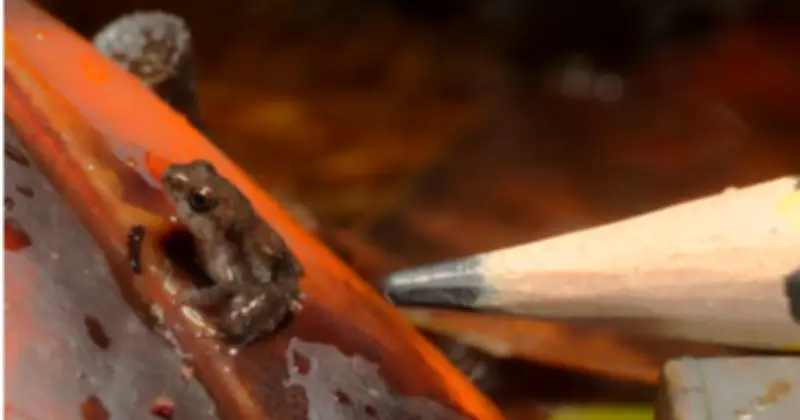
Fifteen of the world's rarest frogs have been born at London Zoo in a major boost for the critically endangered species. It is the first time that the tiny Afia Birago's puddle frogs, currently the size of a pencil tip, have been born under human care.
Emergency conservation programme
Ben Tapley, the Zoological Society of London's (ZSL) curator of reptiles and amphibians, said: "These 15 frogs are the first Afia Birago's puddle frogs born as part of our emergency conservation programme for the species. They may be tiny enough to sit on your fingertip, but their arrival represents a huge step forward for an amphibian facing an uncertain future."
The birth followed the arrival of 20 adult frogs from Ghana in September last year as part of a collaborative conservation effort with Herp Conservation Ghana and the CSIR-Forestry Research Institute of Ghana.
Species facing imminent extinction
The frog was described as a new species to science eight years ago, but it has since been found to survive in just two perennial pools in Ghana's Atewa Hills Forest Reserve. The species is facing "imminent extinction" because its habitat is being destroyed by mining.
ZSL amphibian keeper Unnar Aevarsson said: "When the adult frogs arrived in London last year, almost nothing was known about them. Using our extensive experience caring for amphibians, our team have since learned so much more about these incredible frogs - developing the knowledge, techniques and breeding protocols needed to give them the best chance of survival.
"These 5mm-long froglets are cause for celebration, but our work to save Afia Birago's puddle frog has only just begun: the wider goal now is for our partners to establish sustainable conservation populations in Ghana that can support their recovery in the wild - these births make that a real possibility."
Conservation facility in Ghana
Before the frogs' arrival in the UK, Mr Aevarsson travelled to Ghana to help establish a conservation breeding facility in Kumasi – the first dedicated to amphibian conservation in West Africa – and gather the information the team needed about the frogs' natural environment to inform their new home at London Zoo.




