Florida Town Investigates Mass Fish Deaths Linked to Fertilizer Runoff
An unusual number of dead fish have been discovered in a Florida coastal town this month, with local officials pointing to fertilizer runoff as the likely cause. The incident occurred in Buccaneer Lagoon, a small waterway located on Estero Island within Fort Myers Beach.
Resident Reports and Official Response
Fort Myers Beach resident Stephen Clark first noticed a concerning odor while boating from Buccaneer Lagoon on March 12. The following day, he observed numerous dead fish in a connected canal. Town officials quickly confirmed they had found an unusual number of deceased fish in the lagoon and immediately launched an investigation.
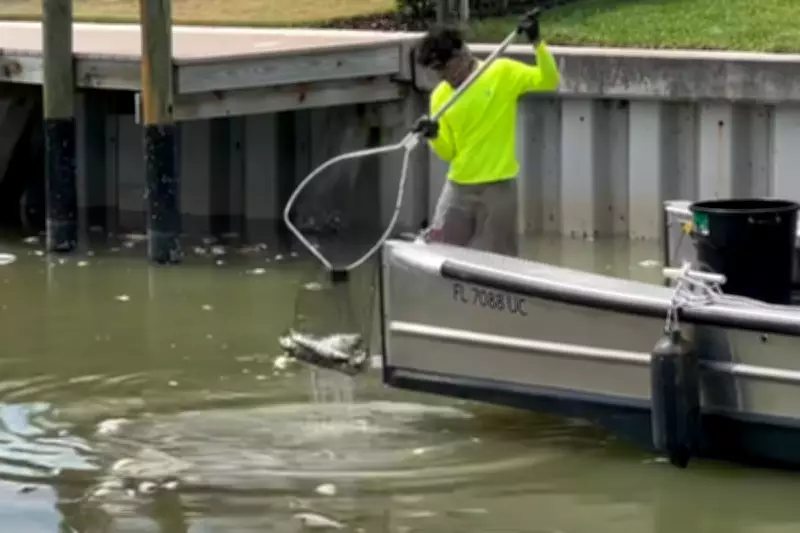
Photographs and video footage from the scene showed dozens of dead fish floating on the water's surface. By March 13, cleanup crews were actively retrieving the deceased marine life from the affected waterway.

Scientific Analysis Points to Oxygen Depletion
Researchers determined that the fish likely died from suffocation due to critically low oxygen levels in the water. According to Chadd Chustz, an environmental projects manager for Fort Myers Beach, fertilizer runoff from nearby properties deposited excessive nutrients into the lagoon.
"So you have a bloom, and they consume the oxygen," Chustz explained. "Oxygen is depleted, so you have an anoxic condition where the fish suffocate underwater and die."
Abigail Eberhart, the town's Public Information Officer, noted that while officials cannot pinpoint exactly which properties contributed to the runoff, the nutrient composition strongly suggests fertilizer as the source. "We do think, because of the high nutrient content and its composition, it's likely fertilizer," she stated.
Distinguishing from Harmful Algal Blooms
Importantly, researchers confirmed this was not a toxic red tide event. Chustz reported finding a high number of non-toxic dinoflagellates in the water samples. Eberhart emphasized this represented a "best case" scenario since the algal bloom was not harmful to residents or other animals.
The estimated death toll ranged from dozens to potentially one hundred fish. Town officials stressed the importance of prompt cleanup, as decomposing fish can themselves become nutrient sources that perpetuate the cycle of oxygen depletion.
Existing Regulations and Future Prevention
Fort Myers Beach already maintains ordinances restricting fertilizer use to protect local waterways. These regulations prohibit fertilizer application during flood watches, tropical storm warnings, hurricane alerts, and throughout the rainy season from June 1 to September 30.
The town also enforces fertilizer-free zones within 15 feet of any water body, wetland, or impervious surface such as streets and driveways. Chustz is now urging property owners to further limit fertilizer use and consider planting native vegetation that thrives naturally without additional nutrients.
"Native vegetation will thrive in the natural environment that is harsh down here, so it doesn't need that fertilizer to grow," he advised. "So you don't need to use fertilizer — that, in turn, reduces the amount of nutrient input that we have from stormwater runoff."
Calls for Continued Investigation
Resident Stephen Clark expressed hope that investigators would continue their work to identify more specific causes of the oxygenation problems. "I hope investigators are looking for a more specific point and cause that could have affected the oxygenation problems that they believe killed the fish," he said.
The incident serves as a stark reminder of how land management practices can significantly impact aquatic ecosystems, even in communities with existing environmental protections.