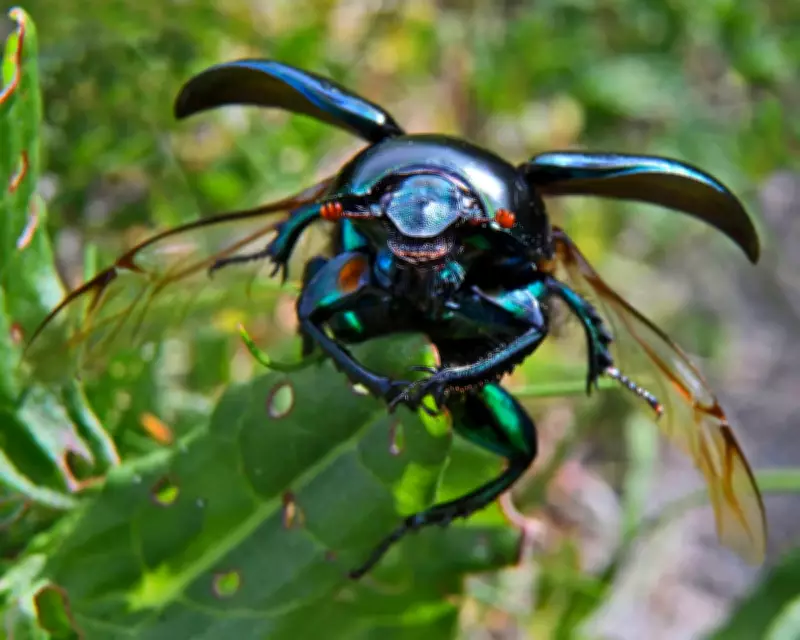
In a captivating entry from a 1911 country diary, the dor beetle, scientifically known as Geotrupes stercorarius, is depicted with its wings opened in Scotland, offering a glimpse into its intriguing natural history. This heavily built coprophagous beetle, adorned with prominent spines or antlers on its "shoulders," was observed struggling through dense grass, showcasing its laborious daytime movements.
Behavioural Insights
Unlike its better-known relatives that emerge in warmer months, this particular species remains active throughout winter, feeding and flying with a reckless abandon at night. When alarmed or touched, the beetle exhibits a curious defence mechanism: it stiffens its already rigid legs, rolls over onto its side or back, and begins to "talk" through a squeaking sound.
Mechanical Communication
Upon closer inspection, the squeak is revealed to be a mechanical note rather than a vocal one, as noted when held to the ear. Once placed back down, the beetle often remains on its back, feebly waving its legs in the air, reminiscent of a cast sheep. This position takes considerable time to recover from, suggesting that frequent alarms could leave these beetles spending a significant portion of their lives upside down.

Despite this peculiar habit, the defence strategy appears largely ineffective against their many foes, raising questions about its evolutionary purpose. The diary reflects on how this behaviour, while fascinating, offers minimal protection in the wild.
This historical account provides a unique window into early 20th-century observations of insect behaviour, highlighting the dor beetle's resilience and the mysteries of its survival tactics.