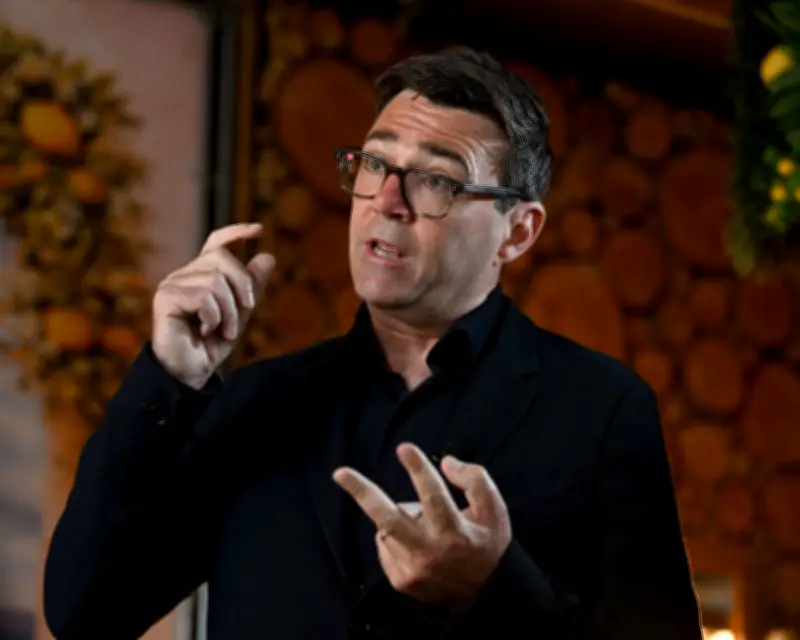
Andy Burnham has yet to detail what nationalizing energy and water would entail on a national scale. Sources indicate that public control of these utilities is central to his agenda if he becomes prime minister.
Burnham's Vision for Public Ownership
According to sources close to the Greater Manchester mayor, a decade-long project to bring water and energy under public control will be a cornerstone of his leadership. Allies say Burnham is serious about taking over 'the essentials of life' to improve performance and potentially reduce consumer bills.
This would represent one of the largest transfers of ownership since the 1980s privatizations but could leave taxpayers liable for billions in infrastructure upgrades and operating costs. One ally stated, 'When Andy says he wants the public to have control over the essentials of life, we should believe him. He is completely serious.'

Burnham has expressed a desire for essentials to be run primarily for public interest, not private gain, but has not specified what that means nationally.
Policy Development
With Labour confident of victory in the Makerfield byelection, Burnham's allies are focusing on turning his vision into concrete policies. A small group, including outgoing MP Josh Simons and former energy minister Miatta Fahnbulleh, is collating ideas. Other contributors include John Wrathmell, JP Spencer, and Tom Whitney.
Plans for Water and Energy
At the heart of the agenda is bringing utilities back under public control, starting with Thames Water. Burnham told the Guardian, 'Public ownership is absolutely an option. I would say for Thames Water, that is what should be done.' Allies want the government to take the company into special administration rather than accepting a creditor deal that would write off up to £1bn in environmental fines.
The government argues such action would cost £100bn, but some legal experts suggest it could be done more cheaply if creditors accept little or no compensation. A Burnham government would likely take over water companies as they fail or franchises expire, modeled on the railway nationalization plan launched by Louise Haigh.
Over about 10 years, the entire sector could be under public control, modeled on Berlin or Paris utilities where water services are run by independent organizations with majority municipal government shares, giving workers and residents board representation. This could allow political leaders to push for bill reductions, though potentially compromising repair and rebuilding programs.
In energy, grid operations by National Grid and regional distribution would be transferred to public ownership, but power generation and retail sales would remain private.
Criticism and Challenges
Critics warn these plans would cost taxpayers heavily, especially as Burnham has promised to stick to borrowing rules and not raise income tax, VAT, or national insurance. He has also proposed cutting employers' national insurance and business rates for pubs and small businesses.
Burnham recently backtracked on supporting Waspi women, clarifying he would not back compensation. As prime minister, he would face calls to raise the defense budget after John Healey's resignation.
Some allies want him to announce cost-of-living measures, including a one-year freeze on private rents, a cap on bus fares, and removing green levies from electricity bills, paid by taxes. These could reduce inflation by 0.6 percentage points, funded partly by increasing capital gains tax as advocated by Wes Streeting.