From City Buzz to Countryside Calm: A Decade of Transformation
A full ten years have passed since John Connell made the life-altering decision to leave behind his successful career as a film producer and investigative journalist. He returned to his family's farm in Ireland, embarking on a journey that would fundamentally reshape his worldview. The initial transition proved challenging, with Connell openly admitting he missed the concrete landscapes, towering skyscrapers, and vibrant energy of urban existence.
The Birth of the 'Earth Eye' Concept
Gradually, however, a remarkable transformation occurred as Connell developed what he now calls his 'earth eye'. This central concept permeates his entire philosophy. "It's a gift that nature gave to me, but it is a gift we all can have," Connell explains in his writings, adding the crucial clarification: "One doesn't need a farm to have an earth eye."
But what exactly constitutes this earth eye perspective? According to Connell, it involves consciously "swapping the digital for the real" and "finding our purpose in fellowship with the earth." He advocates for making dedicated time for daily sessions with nature, emphasizing that "use your earth eye to see that nature can be everywhere – the urban flowering weed is just as alive as a rose in a well-tended garden."

A 12-Step Plan for Modern Living
Connell has meticulously outlined a practical 12-step plan that encourages people to adopt farmer-like thinking and behavior patterns. His admiration for agricultural workers knows absolutely no bounds, as he describes them as "the first stoics" – resilient individuals who have philosophically accepted droughts, floods, crop failures, and livestock losses for millennia because "life is governed by nature… we can endure because we can't control everything."
He suggests we should emulate farmers by rising early to relish sunrise views and the dawn chorus of birds. We must actively seek out joy in our daily routines. Despite farmers' reputation for occasional irascibility – understandable given erratic weather patterns, fluctuating fuel prices, and governmental policies – Connell maintains that farmers fundamentally "trade in the business of joy, from lambing to the flowering of a vegetable or the ripening of a fruit."
Beyond Wishy-Washy Wisdom
At one point, Connell expresses slight apprehension: "I hope the wisdom I have shared is not wishy-washy." Indeed, much of his advice represents fairly straightforward principles: purchasing local produce, prioritizing personal health, cultivating flexible mindsets, and accepting stress and failure as inevitable aspects of human existence.
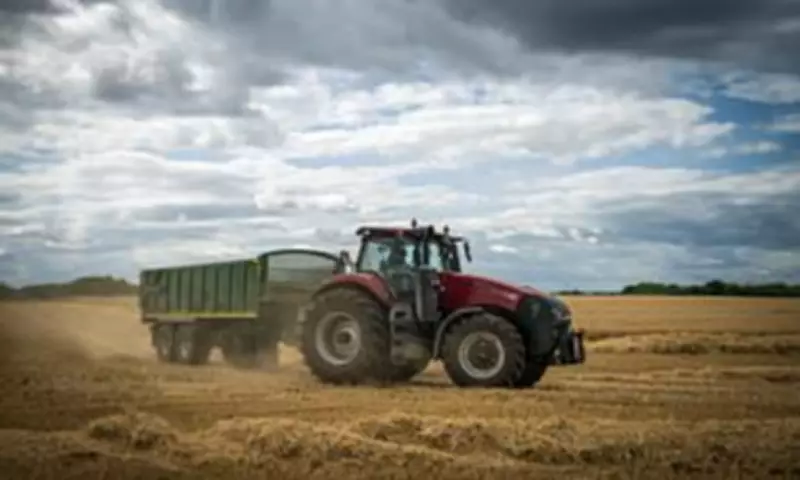
The most compelling section explores the profound power of community cooperation and mutual assistance. When Connell's uncle Mick passed away during peak silage season, neighbors spontaneously arrived with their tractors to gather the bales one final time. No formal requests had been made, but "the word had gone out and they assumed that this was the right thing to do."
Our Daily Agricultural Vote
While this philosophical approach might not convert every reader to full farmer-like thinking, it's difficult to dispute Connell's core argument about supporting agricultural workers and their essential contributions. Even urban dwellers who rarely venture into rural landscapes remain inextricably connected to farming systems, with food-purchasing decisions creating significant impacts. As Connell powerfully concludes: "We only vote for politicians every four or five years, but we vote for a farmer every day, every week and every year."