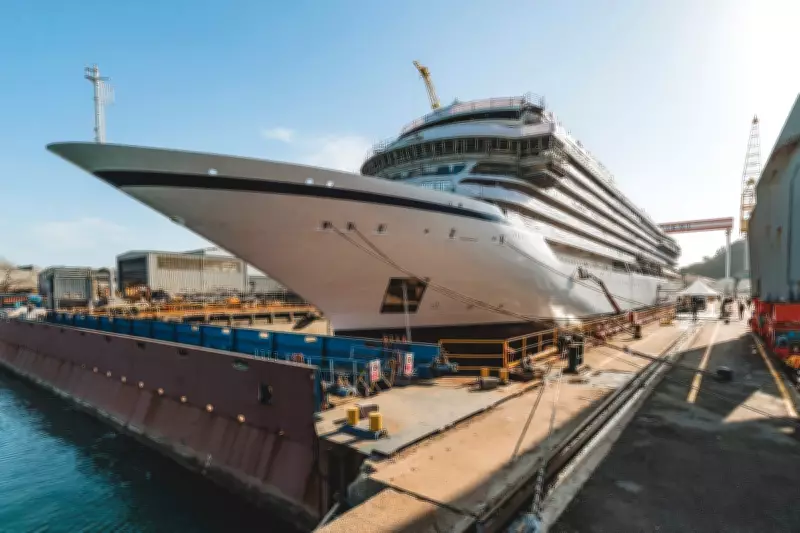
Viking Cruises has achieved a significant breakthrough in the pursuit of environmentally-friendly maritime travel with the float-out of the world's first hydrogen-powered cruise ship. The Viking Libra touched water for the initial time at the Fincantieri shipyard in Ancona, Italy, last week, setting a new standard for sustainable sailings in the cruise industry.
Milestone Launch for Eco-Friendly Cruising
This pioneering vessel is scheduled to commence operations later this year, with its debut voyages planned for November 2026. The itineraries will include cruises across the Mediterranean and northern Europe, offering passengers a greener way to explore these popular destinations.
Innovative Hybrid Propulsion System
In an industry-first development, the Viking Libra features a hybrid propulsion system that utilizes liquified hydrogen to power a polymer electrolyte membrane (PEM) fuel cell system. This advanced technology enables the ship to generate up to six megawatts of power, allowing it to sail with zero emissions during specific segments of its journeys.

While the hydrogen supply is insufficient to cover an entire route, it provides the capability to access more environmentally sensitive areas, such as the Norwegian fjords, using this cleaner fuel alternative. This represents a crucial step forward in reducing the ecological impact of cruise tourism in fragile marine ecosystems.
Leadership and Industry Impact
Torstein Hagen, chairman and chief executive of Viking, emphasized the importance of this achievement during the float-out ceremony. He stated, "The float out of the Viking Libra represents another milestone for Viking and our continued partnership with Fincantieri. From the beginning, our approach to ship design has focused on reducing fuel consumption, and the Viking Libra is our most environmentally friendly vessel yet."
Following the ceremony, the ship will be relocated to a nearby outfitting dock for the final construction phases, which include completing the interior and exterior features. Upon full completion, the Viking Libra will have a gross tonnage of approximately 54,300 tonnes, featuring 499 staterooms that can accommodate up to 998 guests.
Expanding Hydrogen Fleet and Industry Trends
Viking Cruises is further advancing its commitment to sustainable maritime travel with another hydrogen-powered ocean ship, the Viking Astrea, currently under construction and slated for delivery in 2027. This expansion highlights the company's dedication to pioneering eco-friendly technologies in the cruise sector.
Other major cruise lines are also making strides toward lower emissions. For instance, MSC Cruises' newest vessels, World Europa and World America, are powered by liquefied natural gas (LNG), a greener fuel option. Additionally, Hurtigruten achieved a climate-neutral sailing in Norway using biodiesel in October 2025, while Havila Voyages conducted a voyage on biogas the following month in the same region.
Havila Voyages' ships, which also use LNG, incorporate battery packs that enable zero-emission sailing for up to four hours around Norway. Hurtigruten is additionally developing a zero-emission cruise ship powered by a 60-megawatt battery pack, with plans to launch in 2030, underscoring the industry-wide shift toward more sustainable practices.
The launch of the Viking Libra not only marks a historic moment for Viking Cruises but also signals a transformative era in maritime travel, where innovation and environmental stewardship are increasingly prioritized to protect our oceans and destinations for future generations.