
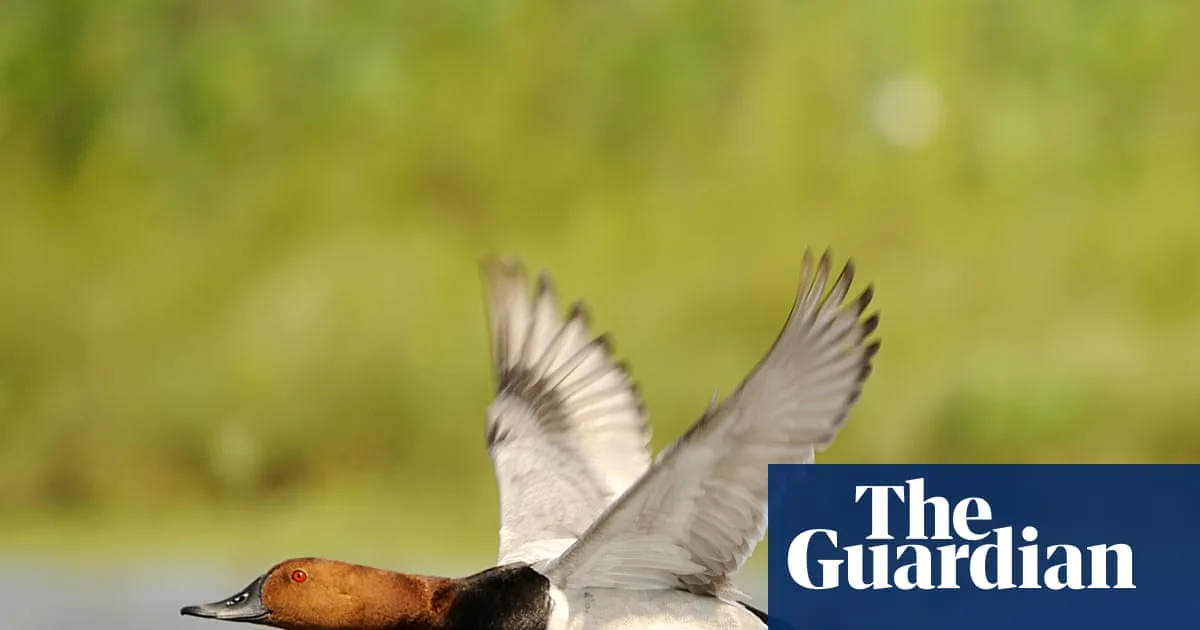
Hunters will be banned from shooting a rare and beautiful duck under new proposals to halt the decline of six British wild birds. The new rules would restrict the shooting of species including the distinctive woodcock, and the striking pintail, goldeneye and pochard ducks, all of which are classed as under threat and have seen their populations fall sharply in recent years.
Once a familiar sight on lakes and reservoirs during winter, the pochard, a diving duck, is declining rapidly but the proposals would see a total ban on shooting the threatened species. The UK supports a small breeding population and is an important wintering destination for the birds.
The breeding population of woodcocks, bulky wading birds with short legs and long bills, has also been falling in recent years. The resident British breeding population of woodcock is now Red-listed as a high conservation priority by the International Union for Conservation of Nature. The proposals would extend the close season – the period of year during which they are protected – for woodcock across England, Wales and Scotland.
Wildlife management is a devolved matter, but coordinated action in Westminster, Holyrood and the Senedd would see changes to schedule 2 part 1 of the Wildlife and Countryside Act 1981. The law lists bird species that may be killed or taken outside their close seasons. The changes will be made through secondary legislation after a consultation process, which will also investigate the potential for adding wood pigeon to the Wildlife and Countryside Act, introducing a close season during the familiar bird’s breeding period on animal welfare grounds. Farmers shoot wood pigeon in large numbers to stop them from damaging crops.
The nature minister Mary Creagh said the proposals showed the government was “committed to protecting wildlife and improving animal welfare”. She said: “The woodcock, pochard, goldeneye, and pintail ducks are all iconic national birds. Their rapid decline is deeply concerning and it is our job to ensure they are properly protected for future generations to cherish.”




