Polish 'Frog Patrol' Volunteers Rescue Amphibians from Road Peril
On rainy spring evenings in a forest near Warsaw, a remarkable citizen-led effort known as the "Frog Patrol" mobilises to safeguard amphibians during their perilous annual migration. Hundreds of dedicated volunteers have joined this initiative in Mlochowski Forest, located 30 kilometres west of the Polish capital, to assist thousands of toads and frogs in crossing a hazardous road that bisects their traditional spawning route.
A Dangerous Journey for Ancient Rituals
As temperatures rise each spring, these amphibians awaken from winter hibernation and embark on a meticulous journey to nearby marshes for millennia-old mating rituals. The females bear the primary burden of this trek, with male toads clinging tightly to their backs to ensure they are not displaced by rivals upon reaching the water. However, a road constructed within the last decade has transformed this natural pilgrimage into a deadly gauntlet, resulting in what locals describe as "sheer amphibian slaughter" with thousands being run over annually.
The Birth of a Rescue Operation
Łukasz Franczuk, coordinator of the Frog Patrol, recounted distressing scenes from four years ago: "The frogs were being run over in the hundreds or thousands. When you were driving on this road, you could see the decomposing corpses. People going to collect the surviving ones were crying—they couldn't stand to watch what was happening." In response, Franczuk and his friends helped organise local volunteers starting three years ago.

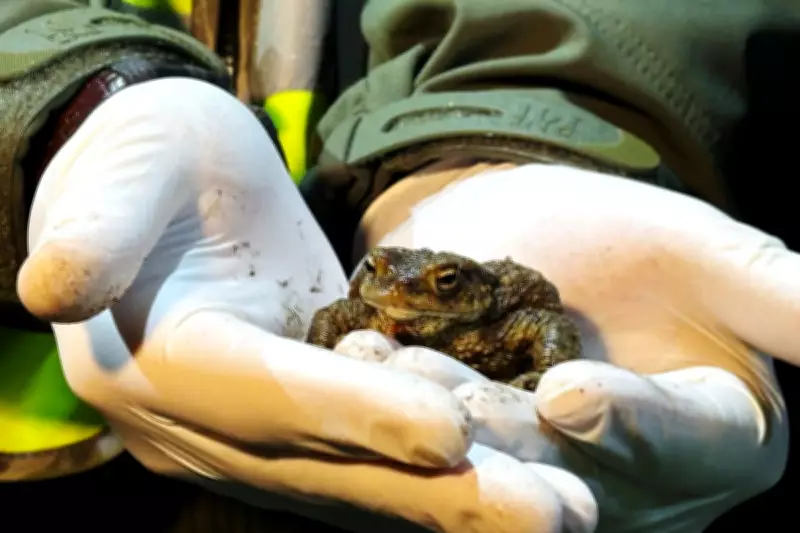
Now, during migration season, volunteers gather every wet evening, fanning out along the forest road wearing reflective yellow vests marked "Frog Patrol" and equipped with headlamps and buckets. They carefully collect amphibians from the roadside and carry them safely across to the marshes. Since frogs breathe through their skin and require humidity, they only migrate during rainy conditions, making these nocturnal rescues essential.
Community Spirit and Conservation Impact
The initiative has fostered deep community engagement, with whole families, including children, participating. Katarzyna Jacniacka, a participant, observed: "It's really impressive to see whole families with kids walking in the rain, with buckets, in these lovely jackets to make them visible... and they carry the frogs from one side of the road to the other." Another volunteer, Aleksandra Tkaczyk, described it as "the kind of connection with nature about which some of us care deeply."
Locals estimate they have saved approximately 18,000 amphibians since the patrols began. Biologist Krzysztof Klimaszewski from the Warsaw SGGW University, who has joined several patrols, emphasised the importance of this effort: "It actually allows this local population of amphibians to survive."
Global Parallels in Amphibian Rescue
Such citizen-led initiatives are not unique to Poland. Similar efforts are underway globally:
- In New Hampshire, USA, volunteers from the Harris Center for Conservation Education rescue various amphibians, including salamanders, from road traffic.
- In Bavaria, Germany, volunteers from BUND Naturschutz report saving up to 700,000 frogs, toads, newts, and salamanders each year.
- In France, despite frog legs being a culinary delicacy, local volunteers assist amphibians; in Provence-Alpes-Côte d’Azur, nets are installed roadside to collect frogs before they enter traffic.
- In Tallinn, Estonia, authorities recently constructed additional frog fences on Tahetorni Street to guide amphibians into underground tunnels, preventing traffic fatalities.
The Polish Frog Patrol exemplifies how grassroots activism can directly address environmental challenges, blending community spirit with tangible conservation outcomes to protect vulnerable wildlife from human infrastructure.