
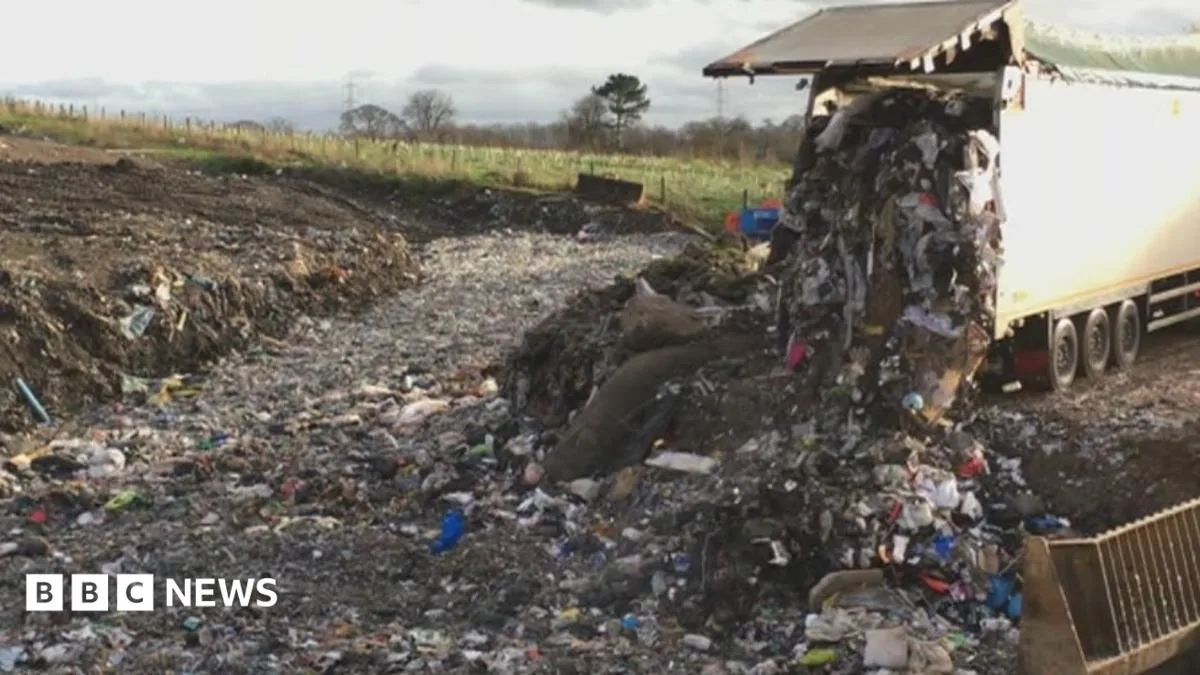
Every day, an average of 1,250 tonnes of rubbish from Wales ends up in landfill, costing £130,000 daily. Despite a 30% drop in landfill waste over three years, a significant portion of what is thrown away could have been recycled, according to figures obtained by BBC Wales.
Denbighshire council spends over £1.4 million annually on landfill and incineration. Senior waste officer Alan Roberts estimates that up to £500,000 could be saved each year if residents placed all waste in the correct bins. Currently, about 63% of the county's rubbish is recycled, but 20% of black bin waste consists of food, and another 20% is paper, cardboard, and other recyclable items.
Roberts attributes the problem partly to a 'yuck factor' around storing food waste separately. “People don’t appreciate that they do really have food waste,” he said, mentioning items like bread crusts, vegetable peelings, tea bags, and coffee grounds. The council has introduced smaller refuse bins and larger recycling containers to encourage proper sorting, alongside occasional enforcement and prosecution for non-compliance.
Meanwhile, recyclable items that end up in the general waste stream take a costly journey. A discarded can from a home in Ruthin travels to a transfer station, then 20 miles to the Hafod Landfill site near Wrexham. There, it is compacted into layers of waste. Ian Craven, Cory Environmental’s area manager, said such items will 'probably be there forever.' The site has planning permission until 2043 and aims to eventually restore the land with habitats for wildlife.
Wales has made progress: biodegradable municipal waste sent to landfill has fallen by 70% since 2005/6 to 256,000 tonnes in 2014/15. However, with landfill tax rising, Denbighshire’s spending on disposal has increased in recent years, underscoring the need for better recycling habits.




