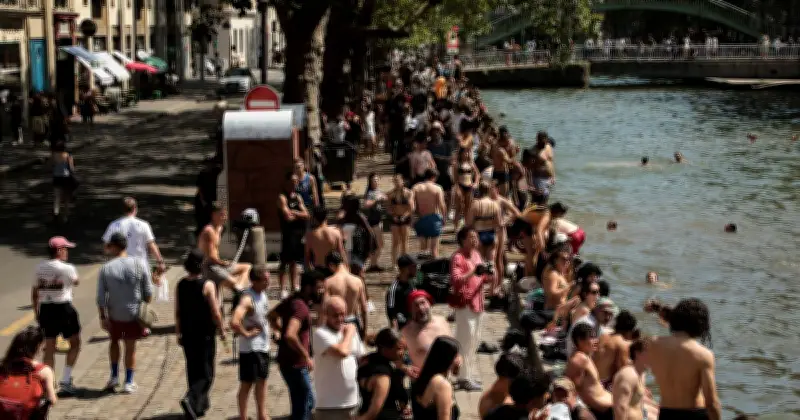
The UK government has issued an 'extreme' travel warning for Britons heading to France, Spain, and Portugal as a heat-dome settles over western Europe, bringing temperatures forecast to reach 40C by Wednesday. This heatwave is expected to surpass the June record set in Hampshire in 1976.
Red Alerts Across Europe
Red heat alerts have been issued in France, Spain, and other nations across western and central Europe, with conditions forecast to intensify. More than half of France's regions are under the harshest weather warning. Tragically, two children aged two and four were found dead in their family car in Carpentras, southern France, in an incident believed to be linked to the heat.
Foreign Office Warnings
On the Foreign Office's website, an update for France advises: 'Find out what you can do to prepare for and respond to extreme weather and natural hazards. In summer months, there is a risk of higher than normal temperatures in France. Check current weather forecasts and read about how to protect yourself on the Meteo France website.'

For Spain, the warning states: 'Extreme weather can affect many areas of Spain, particularly over the summer months. Follow the Spanish Meteorological Office (AEMET) and European Meteorological Services for severe weather warnings.'
The Portugal advice reads: 'In Summer months, there is a risk of higher than normal temperatures in Portugal. Check current weather forecasts and read about how to protect yourself on the Portuguese Institute for Sea and Atmosphere website.'
UK Red Warning and Record Temperatures
In the UK, the Met Office has issued a red weather warning for extreme heat covering an area from London to Swansea and Somerset to Birmingham, in force from 9am Wednesday until 9pm Thursday. Temperatures could rival the UK's all-time peak of 40.3C recorded in July 2022. Met Office spokesman Grahame Madge said: 'The Met Office is flagging 39C as a headline maximum temperature on Thursday, most likely for somewhere in London or the South East. It is possible we could see temperatures higher than the 39C if the final values are at the upper end of our narrow range. The other major factor is the high humidity which for many will make the intense heat even harder to endure.'
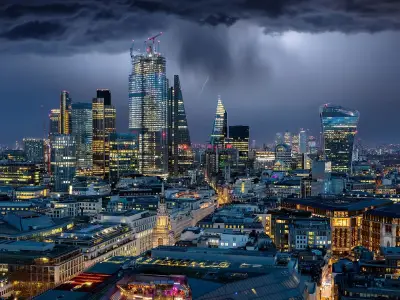
Last night, temperatures remained above 20C at nine locations across England, constituting a tropical night. The heat triggered thunderstorms and lightning strikes, with the Met Office confirming Somerset experienced 'around 18,540 strikes in the past 24 hours'. The London Fire Brigade (LFB) fielded 400 calls overnight, including two house fires believed sparked by lightning and widespread flooding.
Transport Disruption and Fire Risk
LFB Assistant Commissioner Pat Goulbourne warned that 'the chance of wildfires spreading rapidly is high' during prolonged dry heat. Disposable barbecues pose 'a significant fire risk as the heat can be retained for many hours', urging the public to avoid taking them to parks. On Monday, 25 firefighters tackled a scrubland blaze in Enfield, north London.
London's transport network faced severe disruption. On the Elizabeth Line, flooding caused no service between Heathrow Terminals 2 and 3 and Terminal 4. The Mildmay Line operates a reduced timetable due to heat. On national rail, extreme temperatures risk sagging overhead wires, buckled rails, and lineside fires. Avanti West Coast will run fewer services between Tuesday and Thursday, warning of further disruption. Chiltern Railways has scrapped over half its timetable for three days, advising: 'We strongly advise you to avoid travelling if possible.' The RAC reported handling 10% more breakdowns than typical, expecting demand to 'increase significantly as temperatures peak'.