The Bipartisan American Affordability and Jobs Act of 2026 (Baaja), a permitting reform bill passed by the US Senate, would weaken key clean water protections while doing little to speed up major energy projects, advocates warn.
The bill passed the Senate 62-33 and is now being debated in the House. It aims to reduce the time federal agencies take to approve major energy and infrastructure projects, including power lines, fossil fuel pipelines, natural gas plants and datacenters. However, it also includes provisions that would make it harder for states to protect against water pollution, double the time between automatic reviews of water pollution permits, and reduce transparency around the types and levels of water pollution.
Opposition from Pfas-affected communities
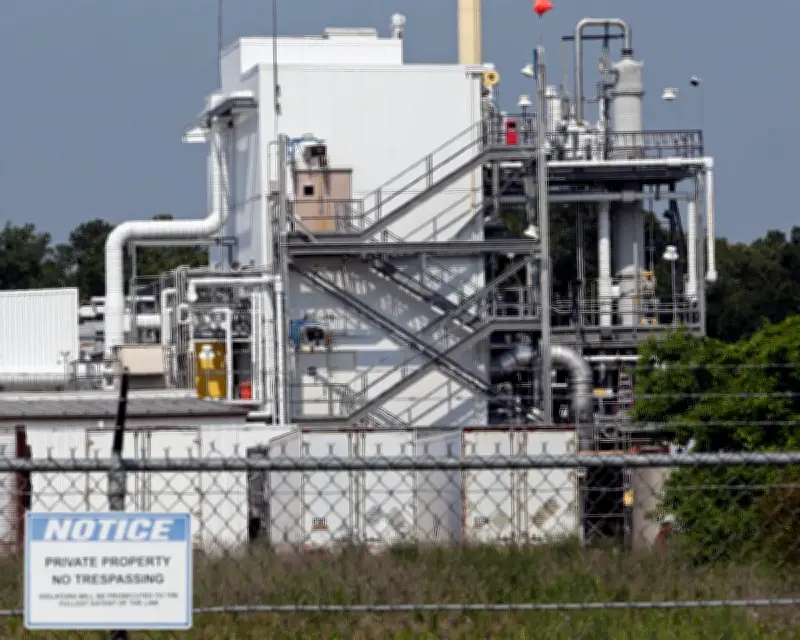
More than 50 groups in communities affected by Pfas "forever chemical" water pollution have come out against the bill. They warn that it would weaken some of the few mechanisms in US law that regulate the discharge of these chemicals. Emily Donovan, co-founder of the Clean Cape Fear advocacy group in Wilmington, North Carolina, said the law would "put us in more danger." In that area, drinking, surface and ground water is polluted by discharge from a nearby Pfas factory.
"We already see how hard it is for the [Environmental Protection Agency (EPA)] to [regulate] Pfas," Donovan said. "What frustrates us is we don't need to make it harder."
Industry support and environmental opposition
Baaja has drawn wide industry support, including from trade groups like the American Chemistry Council and American Petroleum Institute. It is opposed by virtually every major US environmental group because it would eliminate some foundational environmental protections. Supporters say the cost is worth it to build energy projects faster and hasten the transition to clean energy. Opponents say industry is using the clean energy transition as cover to push unnecessary changes to water laws that do nothing to improve energy permitting.
Clean Water Action, an advocacy group lobbying against the law, said in a statement: "BAAJA is a handout to the oil and gas industry, while doing very little to solve the permitting problems being used to justify those changes. Congress is trading away protections for states, tribes, wetlands and streams even though those protections are largely unrelated to the years-long delays at the center of the permitting debate."
Changes to EPA rules and permit reviews
The bill would allow industry to sue to undo the EPA's guidance for states on water pollution discharge. The EPA currently develops criteria that states use to limit discharge into waterways without issuing a formal rule, making it hard to challenge in court. Baaja would require a formal rule-making process, slowing the issuance of clean water criteria by several years and opening it to lawsuits. Donovan noted that the criteria are used by states to develop limits on Pfas water pollution, and the change would shift more responsibility onto states that are largely under-resourced and unable to meet the challenge.
Another provision would change the EPA's mandatory review of water pollution permits from five years to 10 years. The EPA uses this review to require polluters to track their Pfas and other water pollution. Donovan pointed to North Carolina's Pfas pollution to highlight how the provision would prolong public exposure to dangerous chemicals. In 2019, North Carolina regulators set a health advisory limit of 140 parts per tn (ppt) for GenX, one of the main Pfas compounds polluting the state's waterways. By 2022, the EPA established a health advisory of 10 ppt.
Advocates fear that extending the review period from five to ten years could allow a company issued a water permit in 2020 to continue polluting at higher levels for much longer. "Imagine not being able to make a change for 10 years despite that the science is showing that a chemical is more toxic than originally thought – that's what terrifies and frustrates us," Donovan said. She added that the transition to clean energy does not need to sacrifice clean water. "We can get clean energy without having to cause cancer," she said.