
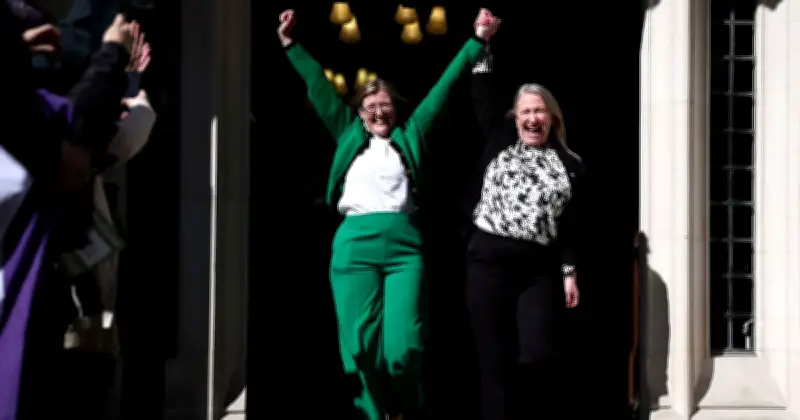
New guidance on single-sex spaces comes into force tomorrow, but campaigners accuse public bodies of defiance. The code, issued by the Equality and Human Rights Commission (EHRC), mandates that toilets, changing rooms, hospital wards, and refuges be used according to biological sex, not gender identity.
Landmark ruling and delayed guidance
The guidance follows a Supreme Court ruling on April 16 last year that defined sex in the Equality Act as biological. The updated code, first sent to the government in September 2025, took almost 18 months to reach this point, with critics blaming the Labour government for the delay.
Helen Joyce, director of advocacy at Sex Matters, said: “Now that the Equality and Human Rights Commission (EHRC) code of practice has come into force, the organisations which parroted that they were ‘waiting for guidance’ in order to avoid simply telling trans-identifying men they cannot use women’s services and facilities are all out of excuses.”
Public sector accused of contempt
Joyce added: “It is a disgrace that many public sector bodies – organisations funded by the public to work for the public good – have been among the worst offenders acting in defiance of the Supreme Court ruling. The contempt displayed for women’s rights and safety by public services such as the NHS and police forces, as well as by councils and Westminster departments, is sure to have undermined women’s confidence in the government and the rule of law.”
The public sector now employs more than 6 million people. The EHRC said: “We have been clear that service providers, associations and public functions should not wait for the code of practice to be published to make any changes needed to comply with the law. As duty-bearers they must assure themselves of their legal responsibilities in their own specific circumstances and seek independent legal advice where necessary.”
Impact on services
The code, covering England, Scotland, and Wales, confirms that a service must be used on the basis of biological sex to be classed as single-sex under the Equality Act. Providers can exclude trans people from single-sex spaces if other users might object. This means men identifying as women have no right to female-only spaces, and if providers allow them in, it is not legally a woman-only space.
It is estimated that 13,000 toilets and more than 5,000 changing rooms may need revamping at gyms, hospitals, and leisure centres, with at least 18,000 signs needing changes. Restaurants, leisure centres, hairdressers, councils, and sports clubs are affected.
Tory Peer Baroness Davies of Devonport said: “The ruling was crystal clear yet too many public bodies continue to ignore women’s rights, safeguarding, and see the law as ideology rather than something to be applied. Single sex changing rooms should be a right but too many women and children continue to be put at risk because public bodies know this pathetic government will do nothing about it.”
A Government spokesperson said: “The Equality and Human Rights Commission’s updated Code of Practice for Services, Public Functions and Associations has now come into force. The Equality Act 2010 is the law and we welcome organisations having clear statutory guidance to help them follow it while protecting and serving the needs of the public.”




