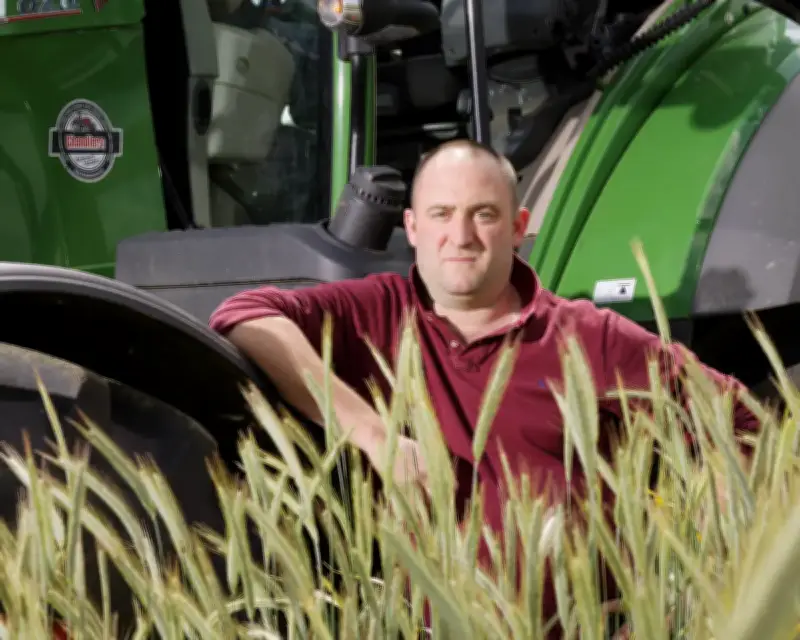
Jamie Burrows, chair of the crops board at the National Farmers’ Union (NFU), has highlighted the severe pressures facing arable farmers in the UK, warning that some businesses may not survive. Speaking from his tractor on his Norfolk farm, Burrows listed multiple challenges confronting food producers as they prepare land for the next crop.
The cost of red diesel, used for agricultural vehicles and taxed at a lower rate than standard diesel, has nearly doubled since late February. Fertiliser costs have also risen by about 20% over the same period, adding to the financial strain on growers.
Multiple crises hitting farmers
“There are so many decent, capable, productive, efficient arable farmers out there, asking how they are supposed to finance the crop they are meant to be putting in the ground,” Burrows said. He concluded: “Some of these businesses aren’t going to make it. It is very, very difficult.”
These challenges come after the UK’s hottest summer on record, which led to England’s worst recorded cereals harvest, according to official production estimates. Farmers are now adding their voices to warnings about the vulnerability of the UK’s food supply.
Calls for greater resilience
Food experts, academics, businesses, and the National Audit Office (NAO) have urged the government to make the UK’s food system more resilient. Threats include the climate crisis, the El Niño weather pattern, geopolitical shocks, energy outages, and cyber-attacks.
Parliament’s public accounts committee is set to begin hearings on the resilience of the UK’s food supply, examining NAO findings on the shortcomings of Defra’s last catastrophe planning exercise, which largely excluded food supply chain businesses.
Government and public response
The UK produces about 60% of the food it needs, but relies more on imports than many European peers. The Cabinet Office is launching a campaign advising households to stock up on tinned foods for potential emergencies. More than 150 food experts and academics have accused ministers of being “complacent” about food security.
Prof Paul Behrens of the Oxford Martin School noted that the UK faces multiple crises simultaneously, including climate change and water scarcity in regions that supply fresh produce. Prof Tim Lang has warned that the UK’s supermarket network is supplied by just 131 distribution hubs, and most food imports enter through four ports.
The UK wound up its strategic food stockpile in the 1990s, while Scandinavian countries maintain greater preparedness. Some citizens, like Ana, a mother of one in south Wales, have begun preparing for emergencies, sharing tips on her YouTube channel. Rob Haward, chief executive of Riverford, called for a “very complicated rethink” of the food supply chain, including longer-term contracts for farmers and restoring soils to withstand climate change.