
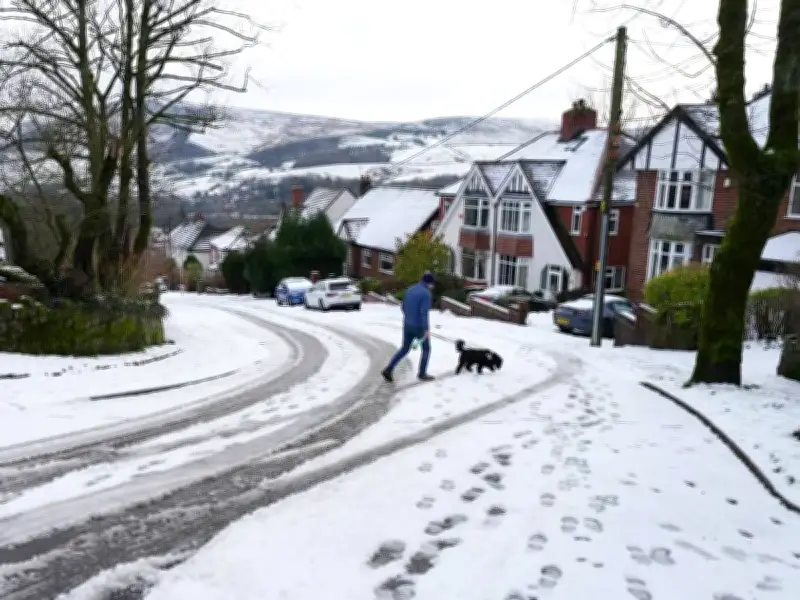
The Met Office has explained how the chances of seeing snow this winter may differ from previous years, as long-term trends show winters are becoming milder and wetter.
Warmer winters and less frost
Although weather can vary significantly from one year to the next for a variety of reasons, long-term trends suggest summers are becoming warmer, while winters are becoming milder and wetter.
The Met Office said winter temperatures from 2016 to 2025 were 0.6C warmer than the 1991 to 2020 average, and 1.4C warmer than 1961 to 1990.
Frost is also becoming less common. Both air and ground frosts have reduced by around a quarter since the 1980s, the national weather agency said. It added: “The number of heating degree days, a measure of when buildings require heating, has also fallen.”
Wetter winters and fewer snow days
Regarding winters becoming wetter in the UK, the Met Office said the “winter half-year” from October to March was 3% wetter during 2016 to 2025 than the 1991 to 2020 average.
While snowy conditions have “not disappeared”, the Met Office added that “substantial snow events” and the average number of days with falling snow have declined in recent years. The “warmer climatic backdrop” means we are less likely to see major cold spells now than we used to be, although they can still happen.
The Met Office said: “The familiar characteristics of the UK’s seasons are not vanishing overnight. Grey summer days, cool spells, winter frosts and occasional significant snowfall will remain part of the country’s weather.
“However, the balance is shifting. Summer heat is becoming more frequent and more intense, while winters are generally becoming milder, wetter and less snowy.”
Outlook for the coming weeks
Although weather models have shown snow may fall over hills in northern England and Scotland in the coming weeks, forecasters say there are no indications yet that a major spell of wintry weather is on the cards.
In its forecast for next week, BBC Weather says temperatures “should generally be near or slightly above the seasonal average by day”, although “calm nights could still be chilly with fog and a touch of frost in sheltered rural spots”.
For the following week, it adds: “Temperatures are still more likely to average near or a little above normal than markedly below, although passing cooler spells, chilly nights and fog remain possible. There is no strong signal at present for a sustained early-season cold outbreak. Confidence in the details is low beyond the coming week.”




