
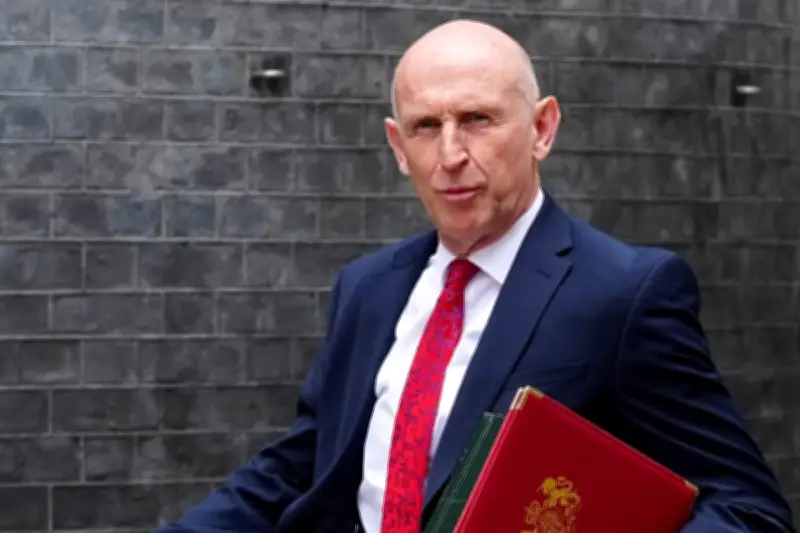
Chancellor John Healey has told Cabinet ministers they must be ready to cut departmental budgets to pay for Prime Minister Andy Burnham's new spending commitments.
Mr Healey announced on Friday that his first Budget will be held on October 28 and said the plans would be “built on fiscal discipline”.
The start of Mr Burnham's premiership has seen a series of announcements expected to require extra spending, including a VAT cut on energy bills, reduced business rates for pubs, radical devolution in England and an expansion of technical training in schools.
No new money
Ministers have been told in a joint letter from the Chancellor and the Prime Minister that there is no new money to pay for these moves.
“We’ve written to the Cabinet to say that if we’re serious about new priorities as a second-stage Labour Government we have to be serious about — and they have to be serious about — reprioritisation of their plans, their budgets,” Mr Healey told The Times.
“They need to pay for the new things they want to do this year and next year within the budgets they’ve already got.”
In the letter, he wrote that departments need to be “disciplined on spending, looking at the tough choices and being ready to shift funding away from unproductive or legacy programmes that no longer reflect this administration’s priorities”.
Defence and the Budget
Mr Healey faces significant challenges in finding money for Mr Burnham's devolution priorities and increased defence spending, amid warnings that the Iran war will further squeeze public finances.
He must also set out how the Government will fund £5 billion of defence spending announced in May's Defence Investment Plan (Dip), without details of how it would be paid for.
Mr Healey resigned as defence secretary ahead of publication of the Dip, arguing it did not provide enough money for the armed forces. He declined to commit to raising defence spending to 3% of GDP by 2030, but suggested it could form part of next year's spending review.
“At the spending review, we will set out a clear path to meeting our 3.5% Nato commitment in 2035 and we will set a target date on that path for 3%,” he told The Times.
Earlier, he said the Budget would “meet our fiscal rules” and “give businesses and families some of the stability they need to plan for the future”.
Pressure on tax and spending
Experts have warned Mr Healey that he will need to raise taxes or cut spending elsewhere, as pressure on the public finances has left no room for extra borrowing.
The National Institute of Economic and Social Research (Niesr) said on Wednesday that the conflict in Iran would mean more persistent inflation and higher interest rates.
Stephen Millard, Niesr's deputy director for macroeconomics, suggested Mr Healey should look at the welfare bill or the pensions triple lock as areas for potential cuts. He also suggested the Chancellor should consider raising income tax, which would break Labour's 2024 manifesto pledge not to raise that levy, national insurance or VAT.
That pledge, along with the fiscal rules set by former chancellor Rachel Reeves on borrowing, are likely to constrain Mr Healey's room for manoeuvre.
In a letter to Commons Treasury Committee chairwoman Dame Meg Hillier, the Chancellor stressed his commitment to fiscal discipline. He said: “Fiscal credibility is the bedrock of economic stability and national security.”
“That is why we will abide by the fiscal rules, ensuring we retain a buffer to protect us against uncertainty and the impact of instability in the Middle East.”
In her last Budget, Ms Reeves left a £22 billion buffer against her fiscal rules, but persistent inflation due to the Iran war could have eroded this.
Shadow chancellor Sir Mel Stride said the announcement of the Budget date meant “89 more days of unfunded spending commitments and damaging tax speculation until we get some details”, and “89 more days for Brits to wait before they know how much their taxes are going to go up to fund Burnham’s spending addiction”.
He added: “Only the Conservatives have a plan to cut spending by £50 billion starting with the welfare bill, so we can cut taxes, lower your bills and back business to deliver a stronger economy and a stronger country.”




