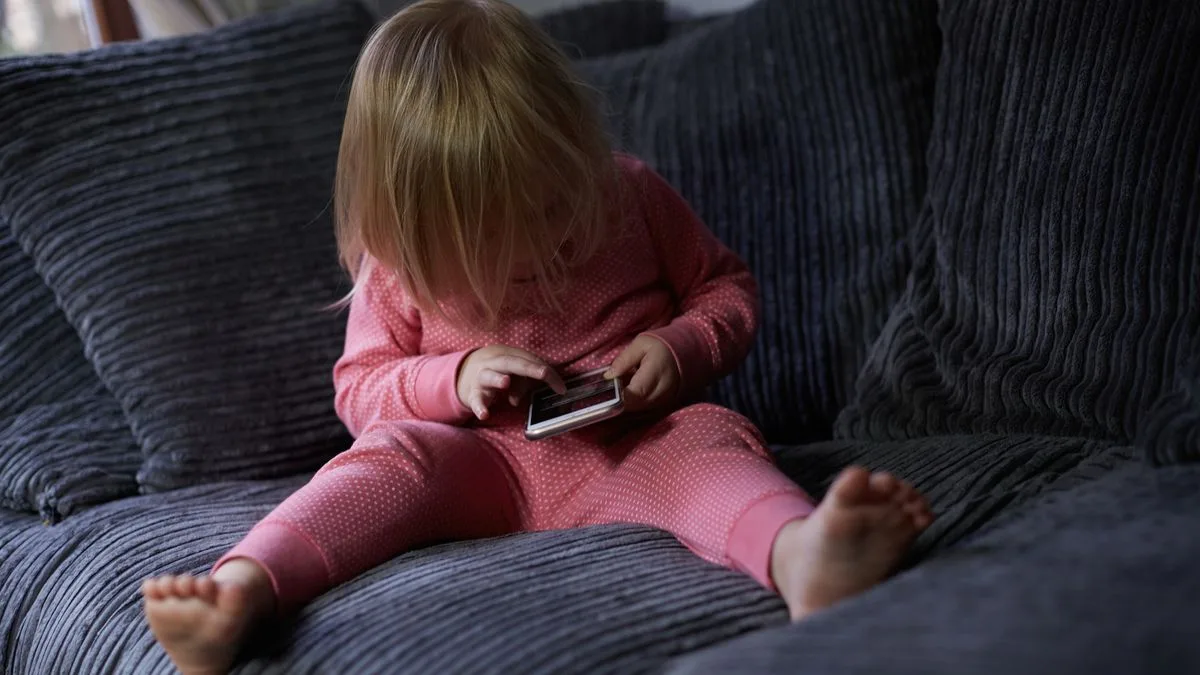
The UK government has issued landmark guidance recommending that children aged two to five should have no more than one hour of screen time per day, and should avoid screens entirely during mealtimes and before bedtime. Children under two should avoid screens altogether unless they are used to encourage real-life bonding.
The guidance, developed by an expert panel led by the Children’s Commissioner Dame Rachel de Souza and paediatrician Professor Russell Viner, also advises against fast-paced, social media-style videos and AI toys. Slow-paced content is deemed “far better” for children’s development. Families are encouraged to watch or use screens together, as experts say talking and engaging with content is linked to better cognitive development than solo screen use.
Prime Minister Keir Starmer said parenting in the digital age “can feel relentless” and vowed not to leave parents to “face this battle alone”. Education Secretary Bridget Phillipson added that the government is giving parents “clear, trusted support”. Campaigners stressed the advice is not about blaming parents but providing clear guidance.

The guidance comes as research shows 98% of children under two watch digital content every day for an average of 127 minutes. A study also found children with around five hours of daily screen time could say fewer words than those with less than an hour. Separate research by Kindred Squared found 28% of children starting reception cannot use a book properly, with many attempting to “swipe” physical pages like a tablet.
The government has also launched a consultation on measures to tackle online harms, including a possible social media ban for under-16s, overnight curfews, or caps on apps. Starmer said the government will study a recent California jury ruling that found Meta and Google liable for designing addictive platforms, adding: “We need to go further.”