
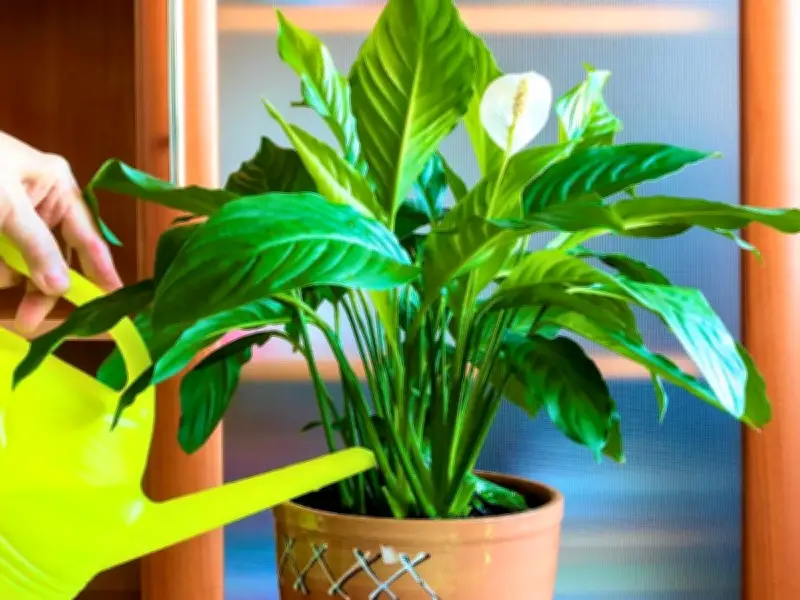
Peace lilies may seem like low-maintenance houseplants, but a common watering habit could be killing them. According to gardening experts at Prickle Plants, using tap water is one of the most frequent mistakes owners make.
The fluoride in tap water can harm peace lilies, the experts said, and the plant would much prefer rainwater. They recommend leaving a small watering can outside to collect rain and using that when watering.
Why tap water harms peace lilies
Tap water in parts of the UK may contain high levels of salts, minerals, or compounds such as fluoride, which is added to drinking water to protect teeth against decay. Peace lilies naturally grow in tropical regions where rainfall has few dissolved minerals, so they have not developed tolerance to these substances.
When tap water is used, fluoride and other minerals accumulate in the soil, and the plant cannot expel them through its root system. Over time, the soil becomes oversalted, making it harder for roots to absorb water and eventually causing dehydration.
Signs of distress and the rainwater solution
The first signs of trouble appear as browning leaf tips, followed by yellowing leaves, wilting, and eventually death. Rainwater is better because it has lower fluoride levels, preventing mineral buildup and keeping roots healthy.
To water properly, check the weather forecast and place a clean container outside whenever the plant needs watering. A garden is ideal, though a balcony or windowsill works if the container is secured safely and cannot fall from a height.
Place the peace lily in a sink, shower, bath, or another area with good drainage, then pour the collected rainwater directly into the soil. Let the water drain fully so it does not pool and cause root rot. Once drained, return the plant to its usual spot.
Switching from tap water to rainwater should leave the peace lily noticeably healthier, with perkier blooms and glossier leaves, as mineral deposits no longer clog the soil.




