
The US Food and Drug Administration (FDA) has proposed a rule to close a loophole in how food manufacturers notify the agency about new ingredients, but the Trump administration has again postponed defining 'ultra-processed foods,' promising more details later.
The move would require companies to submit all ingredients entering the market under the Generally Recognized As Safe (GRAS) pathway, which currently allows ingredients to be used if proven safe through scientific research or common use. The framework, established in 1958, was intended as an exemption but has become the primary route for new substances in the US food supply, far outpacing the formal food additive petition process.
Reactions to the Proposal
Marion Nestle, professor emerita of nutrition, food studies, and public health at New York University, expressed disbelief: 'You have to be kidding. That’s all?' She questioned the delay in closing the loophole and the absence of the promised ultra-processed food definition.
Kyle Diamantas, acting commissioner of the FDA, said in a press call that the rule would 'formally transition the Gras framework from a voluntary program to a mandatory notification system.' It would apply to all current and future ingredients using the pathway.
Amaru Sanchez, a food and agriculture lawyer at Akin Gump Strauss Hauer & Feld, called it 'a huge deal for the food industry,' with ripple effects across suppliers, companies, retailers, and consumers. However, he noted uncertainty about the FDA's legal authority to mandate such notifications, especially after recent legal shifts like the major questions doctrine and the Chevron decision.
Ultra-Processed Foods Definition Delayed Again
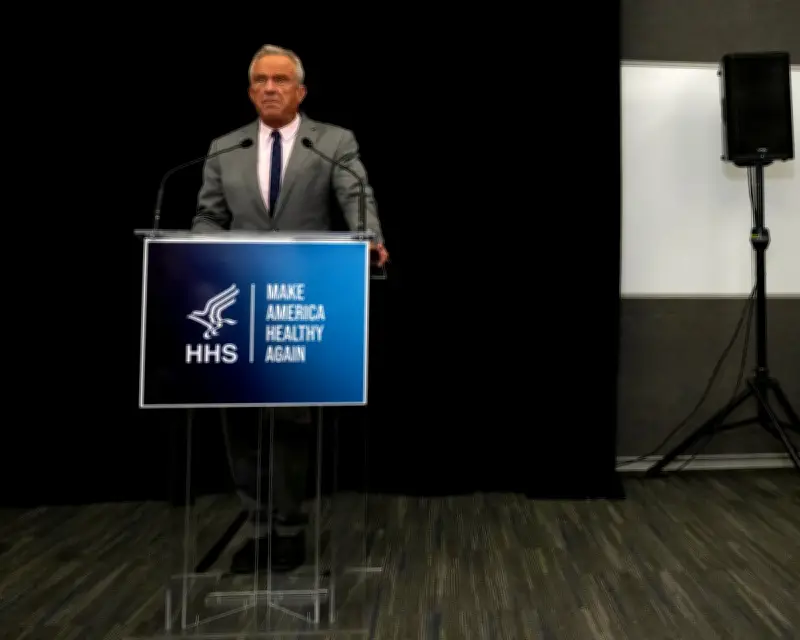
Robert F Kennedy Jr, secretary of the US Department of Health and Human Services (HHS), had promised a definition of ultra-processed foods 'by April,' but Diamantas previously said that 'a definition for ultra-processed foods is really hard.' There is no scientific consensus on what constitutes ultra-processed foods, and their health effects remain debated.
Diamantas said Monday that HHS and the US Department of Agriculture have submitted a proposed definition 'aimed at creating a stronger foundation for future federal nutrition research,' but additional information will be shared later.
Potential Impact and Outbreak Context
If implemented, the rule would be an improvement, but Nestle noted that 'the company is still responsible for the science and will still be hiring its own experts to say the additive is safe.' She also raised concerns about FDA staff capacity and the lack of clarity on what happens if the FDA rejects a notification.
The FDA also plans to publish guidance on biological hazards in ready-to-eat fresh-cut produce on Tuesday. The US is currently facing one of the largest recorded foodborne illness outbreaks, with over 10,000 confirmed cases of cyclosporiasis, plus salmonella outbreaks linked to eggs and jalapeños, leading to recalls of Taylor Farms products in 26 states.




