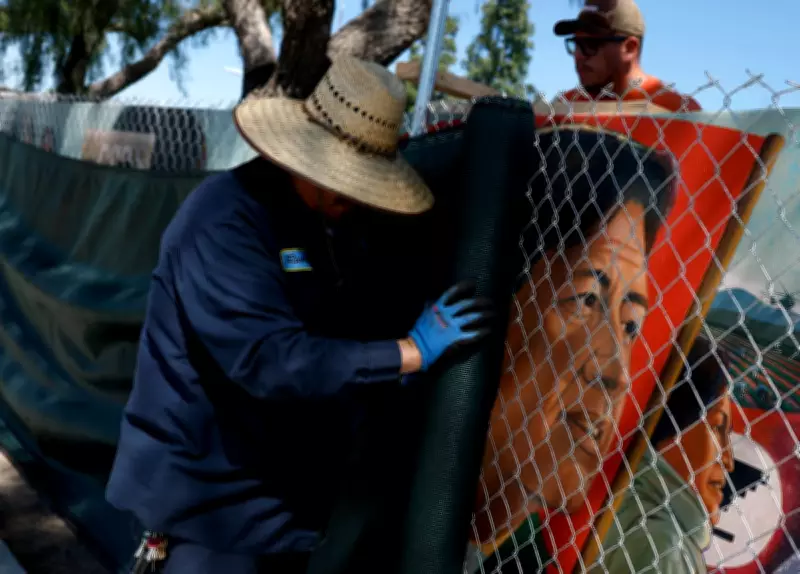
In a significant legislative move, California lawmakers have voted to rename the state holiday known as Cesar Chavez Day as Farmworkers Day. This decision comes in response to recent explosive sexual abuse allegations against the late labor leader and civil rights activist, Cesar Chavez. The bill, which passed with bipartisan support in the state assembly, is now awaiting the signature of Democratic Governor Gavin Newsom, who is expected to approve it swiftly.
Allegations Prompt Swift Action
The push to rename the holiday follows public revelations last week that Chavez allegedly sexually abused girls and women during the 1960s, while he was building a major farmworker labor rights movement in California's agricultural heartland. Among the accusers is Dolores Huerta, who co-led the movement that eventually became the United Farm Workers. These allegations have triggered a wave of efforts across California to alter memorials honoring Chavez, a figure once widely admired for his role in securing better wages and working conditions for farmworkers in the 1960s and 1970s.
Historical Context and Legacy
California was the first state to designate Chavez's birthday, 31 March, as a holiday nearly 30 years ago. In 2000, the legislature passed a bill making it an official paid day off for state employees and mandating that students learn about his legacy and his contributions to the labor movement in California. However, the recent allegations have led to a rapid reassessment of his iconic status, which had only grown since his death in 1993. Assemblymember Cecilia Aguiar-Curry emphasized during the vote, "We cannot ignore wrongdoing and we should not continue to celebrate a single person when the movement itself is so much bigger."

Bipartisan Support and Worker Recognition
The bill received bipartisan backing, with Republican assemblymember Alexandra Macedo stating that the change aims to honor workers and their families. "This isn't just about a date on a calendar or a name on a building," Macedo said. "It is about the hands that feed this nation. It is about the men and women who are in the orchards, in the fields, before the sun even touches the horizon, and who are still there long after it sets." This shift reflects a broader effort to focus on the collective achievements of farmworkers rather than individual figures.
Immediate Repercussions Across California
Since the allegations surfaced, several institutions and cities have taken steps to distance themselves from Chavez's name. California State University, Fresno, has covered up a statue of Chavez on campus, while San Francisco, Los Angeles, and Sacramento have initiated processes to erase his name from public landmarks. Some advocates have suggested replacing Chavez's name with that of Dolores Huerta, and several states have indicated they will not observe the day. Senate pro tempore president Monique Limon highlighted the importance of honoring farmworkers, especially in light of federal raids across the state last year, which included a tragic incident where a worker died while being chased by a US Immigration and Customs Enforcement agent.
Looking Forward
As California moves to rename the holiday, the focus remains on recognizing the dignity and contributions of farmworkers. Limon noted, "His death is a reminder of how much farmworkers risk every day to put food on our table. Our farmworkers remind us that everyone deserves to be treated with dignity and respect." This legislative action marks a pivotal moment in the state's ongoing efforts to reconcile historical legacies with contemporary values, ensuring that public commemorations align with current understandings of justice and accountability.