
Incoming Prime Minister Andy Burnham has been urged to use Thames Water's financial crisis as a catalyst for fundamental reform of England's water industry, with new polling showing overwhelming public support for public-interest operation of water companies.
Public Rejection of Privatised Model
New YouGov polling commissioned by River Action reveals that just one per cent of the British public believes water companies should prioritise shareholders or private interests. In contrast, 77 per cent believe water companies should operate entirely or largely in the public interest. The findings represent a decisive rejection of the shareholder-first model that has dominated the industry since privatisation.
When asked how water companies should use profits, only one per cent favoured returning them to investors. Instead, the public wants profits reinvested into fixing leaking infrastructure (44 per cent), reducing customer bills (28 per cent), and improving environmental performance (17 per cent), including restoring river health.
Nearly half (47 per cent) of respondents said water companies should be accountable to customers, while just one per cent chose investors. James Wallace, CEO of River Action, described the results as an overwhelming mandate for change.
Thames Water Crisis as Opportunity
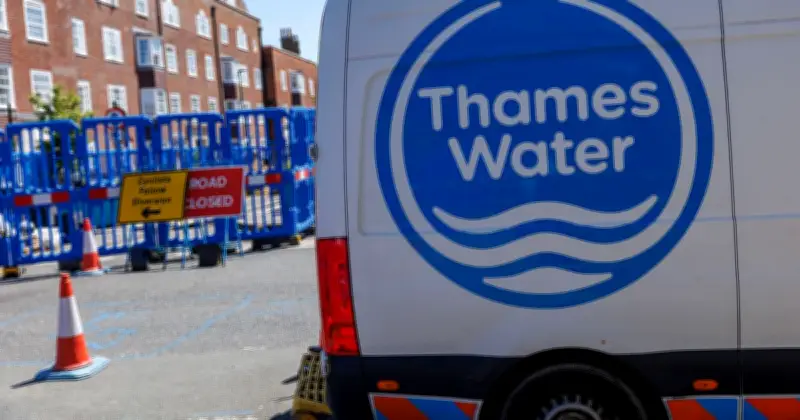
Burnham's first major test could come with Thames Water, which remains in severe financial distress while presiding over repeated illegal pollution incidents. Reports indicate the government is considering placing the company into a special administration regime (SAR), allowing services to continue while a buyer is sought.
Wallace argues that a SAR would offer a once-in-a-generation opportunity to redesign England's largest water company around serving customers, protecting rivers, and investing for the long term, rather than maximising returns for investors. He cautioned against a return to the underfunded nationalised model of the past, advocating instead for a modern public-interest framework.
Water is unlike other sectors, Wallace noted, as customers cannot choose an alternative supplier and rivers cannot negotiate with polluters. The industry provides an essential public service on which every community depends, and its ownership and governance should reflect that reality.
Strong Support for Reforms
The polling shows strong support for specific reforms: legal requirements to reinvest profits into infrastructure (55 per cent), greater transparency (37 per cent), stronger independent regulation (33 per cent), and an end to executive bonuses for failure (39 per cent). Wallace described these ideas as unradical, arguing that the truly radical position is defending a model that allows monopoly companies to prioritise investor returns while rivers deteriorate and customers pay more.
The debate over water company ownership has often been framed as politically divisive, but the polling suggests consensus has shifted. Wallace called on politicians from across the spectrum to unite behind what the public wants: water companies that serve people and nature, not investors.
Burnham inherits one of Britain's most broken sectors but also a rare political opportunity. If he uses Thames Water's crisis to reshape the industry around the public interest, he will not just respond to public opinion but lead one of the most significant reforms since privatisation. The era of pollution for profit has lost its public licence, and the country is ready for leadership and integrity.




