
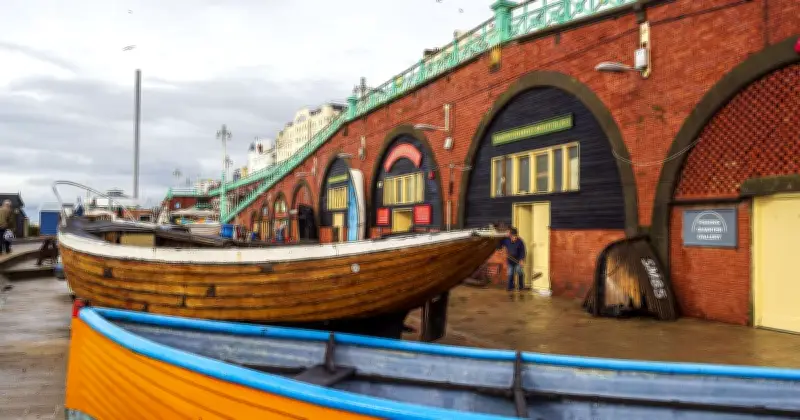
Brighton's historic Victorian seafront arches are set to receive over £22 million in government funding to avoid the risk of collapse and ensure the road above is safe for the next century.
Urgent repairs needed
The King's Road Arches, built around 1890, consist of 76 Victorian brick vaults stretching from the Palace Pier to the Hove border. Originally used by fishermen, they now house shops, restaurants, bars, and galleries. However, they have been identified as being in urgent need of replacement to prevent the road above from collapsing.
The busy road carries nearly 22,000 vehicles and 1,500 cyclists daily, serving as a major route in Brighton's city centre.
Two-phase project
The £22 million project will be delivered in two phases. The first phase, covering the area from the promenade's bandstand to the i360 tower, is due to be completed next year. The second phase, west of Shelter Hall, is scheduled for completion by 2029. Brighton and Hove Council will contribute an additional £3.9 million.
In a statement, roads and buses minister Simon Lightwood said: “Brighton is home to a whole host of attractions, from its iconic beach and legendary pier to the fantastic local businesses dotted across the nearby lanes. This funding will mean that everyone can continue to enjoy all of these for the next 120 years by revamping the Victorian arches that dozens of businesses along the seafront call home – boosting growth across Brighton.”
Economic boost
The government says the projects will generate economic growth, creating new space to help local businesses thrive, with improved space for cafes, bars, and galleries along the seafront.
Madeira Terrace restoration
Separately, a £3 million project announced in 2024 is restoring Madeira Terrace, a set of cast-iron arches closed to the public for 12 years due to safety concerns. Parts of the ironwork have been dismantled for repair, and a new lift is planned to improve accessibility. Scaffolding was recently removed to reveal the new red brick structure.
Councillor Julie Cattell addressed concerns about the pace of work, saying: “We know Madeira Terrace is a vital part of our city’s architectural heritage and is something people really care about. That is partly why we are taking a firm, heritage-led approach. Restoring the existing structure does take more time than simply replacing it – particularly with the testing required – but it is the correct approach.”




