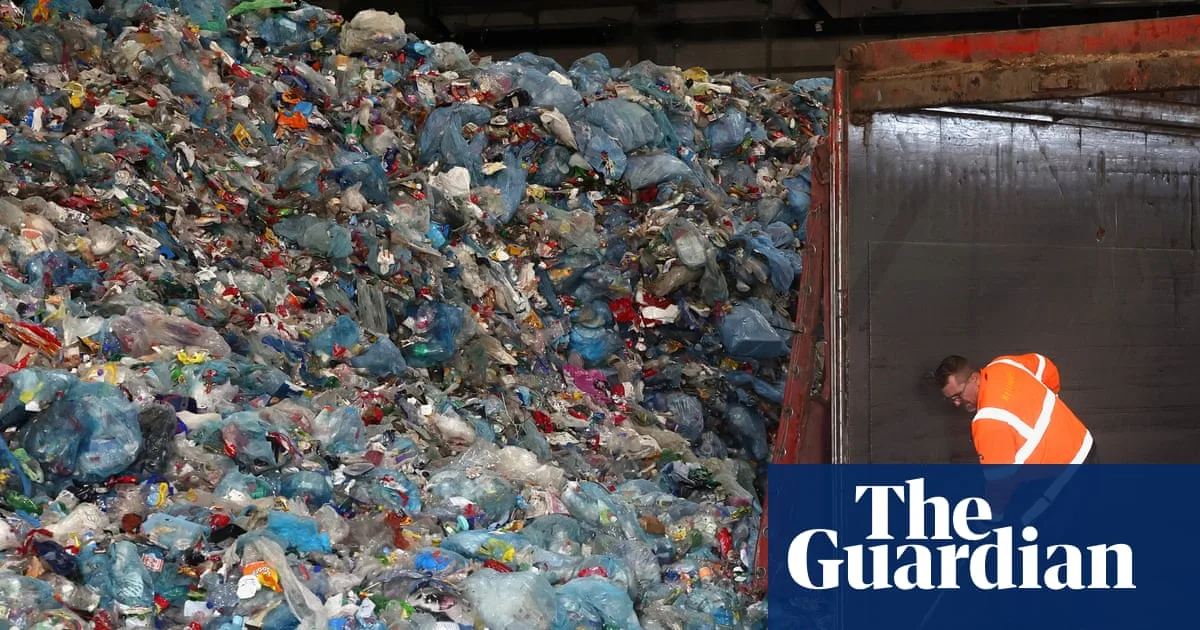
Europe's supermarket shelves are filled with brands claiming their plastic packaging is sustainable, but independent experts say these claims are often misleading. Many products, including Kraft Heinz Beanz and Mondelēz's Philadelphia, use plastic produced by Sabic, a subsidiary of Saudi Aramco, the world's largest corporate greenhouse gas emitter. The packaging is labelled as 'circular' and climate-friendly, yet it remains almost entirely fossil-based.
The petrochemical industry is promoting pyrolysis, a chemical recycling process that turns plastic waste into pyrolysis oil. However, this oil can make up at most 5% of the feedstock and must be diluted with 95% virgin naphtha, a petroleum derivative. 'The whole process is labelled as plastic recycling, while fossil fuel use expands,' said Helmut Maurer, a former senior expert at the European Commission.
Industry relies on two accounting tricks to present high recycling rates and low emissions. 'Mass-balance bookkeeping' attributes recycled input to specific batches, allowing a product with only fossil feedstock to be certified as '100% recycled'. 'Avoided emissions' subtracts hypothetical carbon from incineration, creating apparent savings. 'What matters is not hypothetical emissions, but what is actually emitted,' Maurer added.
Life cycle assessments (LCAs) by Sabic show the full process emits 6% to 8% more than fossil fuel production; net benefits only appear when counting avoided incineration. Critics note that LCAs are often controlled by companies to achieve desired results. Under industry pressure, Europe and the UK are set to legalise these practices, with EU rules taking effect in 2026 and UK regulations in 2027.