Tonga's Prime Minister Embraces US Deep-Sea Mineral Exploration Partnership
The recently elected Prime Minister of Tonga, Lord Fatafehi Fakafānua, has described a new partnership with the United States to explore deep-sea minerals as an "exciting development" for the Pacific island nation. This announcement comes amid growing environmental concerns about the potential impacts of seabed mining on fragile ocean ecosystems.
Growing Interest in Pacific Seabed Resources
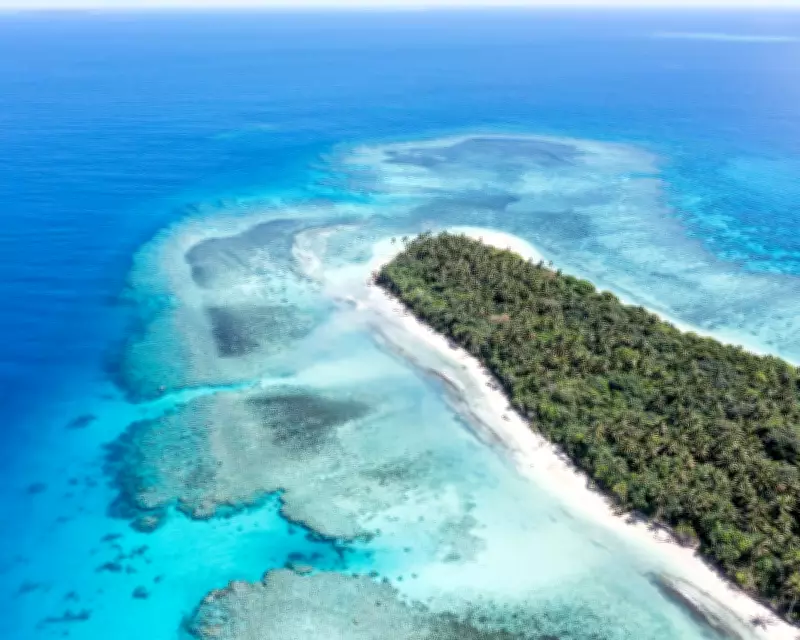
Tonga, located in the South Pacific Ocean, finds itself at the centre of increasing international attention regarding the extraction of critical minerals from the seabed. These minerals are seen as potentially vital for powering various industries and green technologies worldwide. In February, the US and Tonga formalised an agreement to cooperate on "advancing marine scientific research for the responsible exploration of seabed mineral resources".
The joint statement declared both nations were "uniquely positioned" to collaborate in this field, committing to "responsible exploration of seabed minerals and enhancing global scientific understanding of the deep ocean". Prime Minister Fakafānua, elected in November 2025, emphasised Tonga's cautious approach, stating the nation remains "fully committed to scientific exploration of our oceans under the multilateral systems we are legally bound to and continues to strictly maintain a cautious approach of firstly do no harm".

Environmental Opposition and Public Concerns
Despite the government's enthusiasm, environmental groups and local critics have voiced significant apprehension. Dr 'Ungatea Fonua Kata, a prominent academic and education director of Tonga's largest church denomination, the Free Wesleyan Church, has emerged as one of the strongest opponents. "The Pacific Ocean is the largest ocean on Earth yet it's our home," Kata stated. "We are opposed to any activity that could damage that environment. Our livelihood is based in the ocean, so we do not want anything done that would be detrimental to our place of residence."
Kata and others have criticised the lack of public consultation regarding the US deal, arguing that an issue of such vital importance to Tonga's future requires broader democratic engagement. Drew Havea, Chair of the Civil Society Forum of Tonga, has called for a moratorium on deep-sea mining, claiming "most Tongans disagreed with their country's involvement in deep-sea mining". Havea had advocated for a referendum during last November's election, but the previous government did not act on this request.
Regional Support for Caution and Independent Research
The Civil Society Forum of Tonga has found strong regional backing from the Pacific Network on Globalisation, a leading environmental advocacy group. Joey Tau, the Network's regional coordinator, urged extreme caution, noting that deep-sea mining represents a huge unknown with potentially severe consequences. "There is more need for deep-sea science and research, but one that is done independently, that benefits the common good of all humankind, and not one that is driven by industry," Tau explained.
Tau further highlighted the problematic history of mining in the Pacific region and globally, stating: "Mining has really a bad history in this part of the world. You can [also] look at other continents – it has displaced people, it has brought about social differences." Tonga already maintains a long-standing partnership with The Metals Company for exploration activities, though no actual mining operations have commenced to date.
As this nascent industry develops, the tension between economic opportunity and environmental protection continues to define the debate in Tonga and across the Pacific. The nation's leadership appears determined to pursue exploration while maintaining a professed commitment to caution, even as civil society groups demand greater transparency and stronger safeguards for the ocean ecosystems upon which Pacific communities fundamentally depend.