Heavy Horses in Dorset: The Art of Traditional Horse Logging
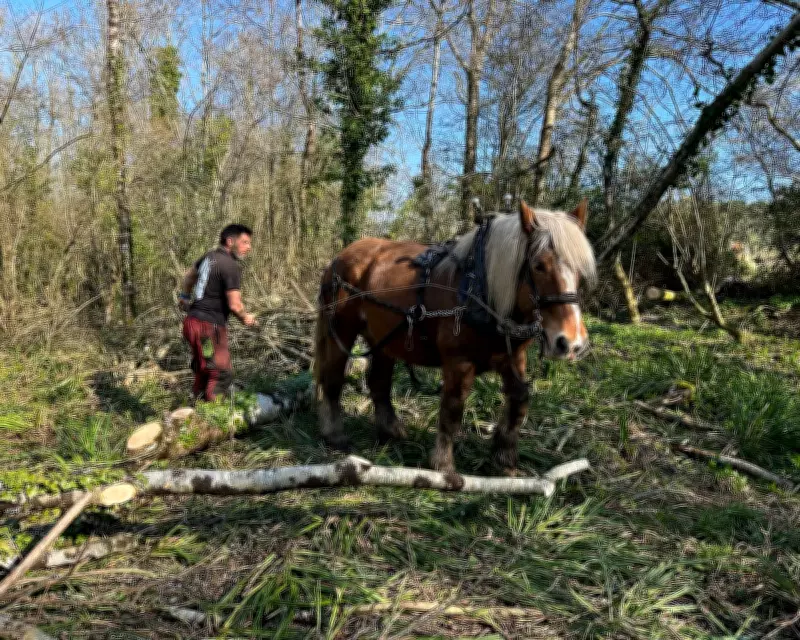
In the serene woodlands of Nettlecombe, Dorset, a scene unfolds that defies modern industrial norms. Toby Hoad, a professional horse logger, works alongside his 12-year-old mare, Etty, extracting felled tree trunks with a grace and precision that machinery often lacks. This partnership between man and beast highlights a sustainable approach to forestry, where heavy horses like the French Comtois breed are proving their worth in delicate ecosystems.
The Partnership of Trust and Communication
Horse logging is not merely a job; it is a dance of mutual understanding and constant communication. Toby Hoad emphasizes the deep bond required, stating, "You've really got to build up a relationship; you've got to build up trust. I can drop the reins, and she will pull out the log for me if it's in a tight spot." This trust allows Etty to navigate tight spaces with ease, her stocky chestnut hindquarters heaving and grunting as she drags logs on a chain. The process is a testament to the years of training and care invested in these animals, making Toby one of only a handful of full-time professionals in this niche field.
Advantages Over Mechanised Methods
When it comes to extracting timber, horsepower offers significant environmental benefits over mechanised alternatives. Equines are highly manoeuvrable, capable of working in restricted spaces without compacting the ground or churning up the forest floor, even in wet conditions. This minimises disturbance to the woodland ecosystem, preserving soil structure and reducing erosion. Toby specifically uses French Comtois draught horses because they are short, strong, and efficient "good-doers" that require less extra feed compared to traditional UK heavy horses like shires, which would be too large for such tasks.

Seasonal Changes and Woodland Life
The current work involves removing diseased ash trees from a coppice, some of the last to be extracted this spring before felling stops on 1 March and timber extraction ceases by May. As the season shifts, the wood comes alive with birdsong, and Etty sheds her thick, woolly winter coat. Occasional puffs of soft, red fur drift among the woodrush, providing ideal nesting material for birds like the blackcap warbler, which serenades from blossoming blackthorn bushes edging the wood with white flowers. Sunshine fills new glades as the day warms, with Etty leaning into her collar, sweat dampening her shoulders, before she takes a well-deserved rest to graze in an adjacent field.
Future Endeavours and Sustainable Practices
Looking ahead, Toby and his horses will transition to bracken rolling, a non-chemical method of controlling fern growth by crushing it with a roller as fronds unfurl. After a short break and attendance at agricultural shows, the team will return to the woods in September, continuing their commitment to sustainable forestry. This approach not only supports biodiversity but also aligns with broader environmental goals, showcasing how traditional methods can coexist with modern conservation efforts.
In an era dominated by machinery, the art of horse logging stands as a poignant reminder of the harmony possible between humans, animals, and nature. Through the dedication of individuals like Toby Hoad, these practices offer a blueprint for sustainable land management that prioritises ecological health over efficiency alone.