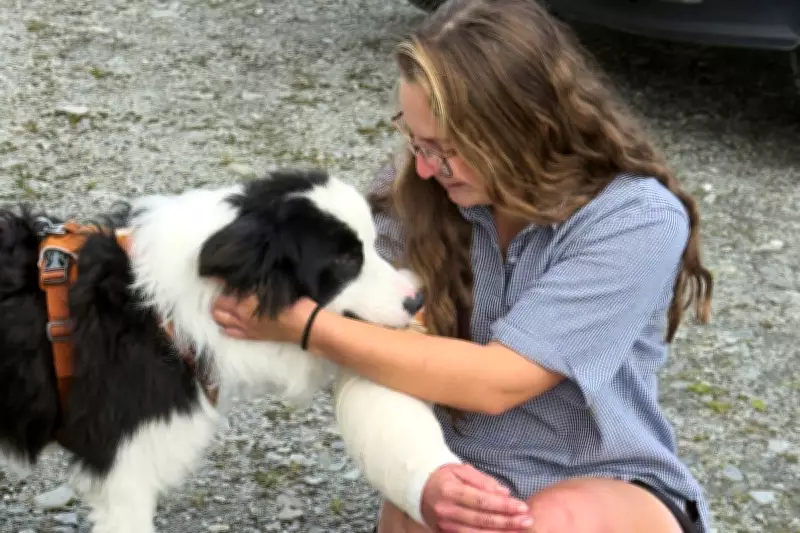
A border collie named Molly has been miraculously found alive after spending nearly a week alone in the remote wilderness of New Zealand's South Island, following a serious hiking accident that left her owner severely injured. The dramatic rescue operation highlights both the dangers of backcountry exploration and the power of community support in emergency situations.
The Hiking Accident and Separation
The incident began on 24 March when Jessica Johnston, Molly's owner, was hiking in the rugged Arahura Valley region. During the trek, Ms Johnston suffered a devastating fall of almost 55 metres, sustaining serious injuries that required immediate medical attention. Despite the severity of the accident, she miraculously survived, but in the chaos, Molly became separated and disappeared into the dense, remote terrain.
The Search Operation
With no official government system in place for animal rescue operations in such remote areas, a private search effort was quickly organised by Precision Helicopters, led by pilot Lillian Newton. The operation was entirely funded by public donations, demonstrating widespread community concern for the missing dog.

The search team employed advanced thermal imaging technology from a helicopter to scan the difficult terrain. After days of searching, their persistence paid off on Tuesday when they located Molly at the base of a waterfall, remarkably close to where her owner had fallen. The border collie was retrieved by a crew member who rappelled down to her location.
The Rescue and Reunion
Molly was found to be in surprisingly good condition despite her week-long ordeal in the wilderness. Veterinary examination confirmed she had suffered no serious injuries and was well-hydrated, suggesting she had found water sources during her time alone.
Jessica Johnston, who is recovering from her injuries, expressed immense gratitude for the public support that made the rescue possible. "The outpouring of concern and generosity from complete strangers has been overwhelming," she stated. "Knowing Molly was safe allowed me to focus on my own recovery with peace of mind."
Broader Implications
This incident has sparked discussions about the need for formal animal rescue protocols in New Zealand's remote regions. Currently, such operations depend entirely on private funding and volunteer efforts, creating potential gaps in emergency response systems for both humans and animals in wilderness areas.
The successful use of thermal imaging technology in this rescue also demonstrates how modern equipment can significantly improve search outcomes in challenging environments. The technique allowed rescuers to detect Molly's heat signature through dense vegetation that would have made visual spotting nearly impossible.
Molly's story serves as a powerful reminder of the bond between humans and their animal companions, and how community support can overcome even the most daunting challenges in remote wilderness situations.