
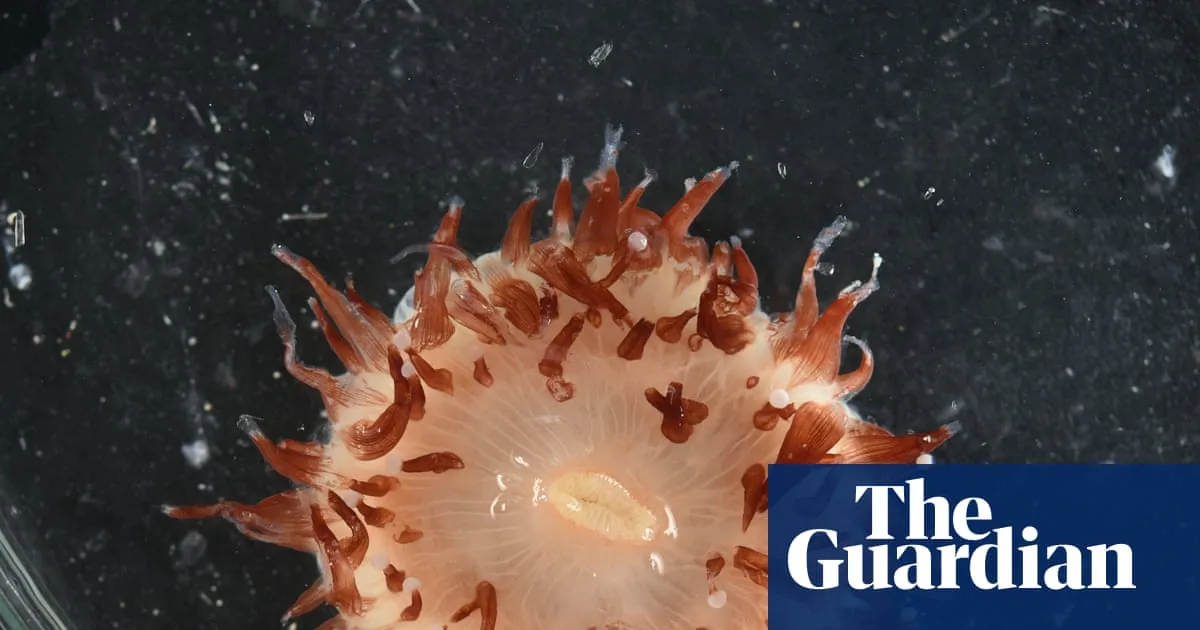
Marine scientists have discovered more than 110 new fish and invertebrate species in the Coral Sea, with the number expected to exceed 200 as further identification is carried out. The species were found in waters between 200 metres and 3km deep within the Coral Sea marine park, Australia's largest marine protected area, spanning nearly 1m sq km east of the Great Barrier Reef.
The new-to-science species—including brittlestars, crabs, sea anemones and sponges—were collected during a 35-day voyage on the CSIRO's Investigator research vessel, which departed Brisbane last October and travelled as far as Mellish Reef, about 1,000km off the Queensland coast. Dr Will White, a shark expert and CSIRO voyage chief scientist, said the expedition aimed to learn more about the area's deepwater biodiversity, for which there was 'very limited data'.
Specimens were identified during what White believes were 'likely the largest taxonomic workshops of marine animals ever undertaken in Australia'. White himself identified four new species: a skate, ray, deepwater catshark and chimaera. The ray, a type of stingaree in the genus Urolophus, was found on the Kenn Plateau halfway between Australia and New Caledonia. The deepwater catshark (genus Apristurus) is a tropical species, described as 'very dark-bodied, almost flabby—truly deepwater things, very slow moving, with lots of little teeth'.
The skate, in the genus Dipturus, is light grey with a long snout and a hard piece of cartilage in the middle. The new chimaera, also known as a ghost shark or rat fish, has a 'rat-like tail, quite a plump nose, and a big spine above the dorsal fin'. Dr Claire Rowe, marine invertebrates collection manager at the Australian Museum, said invertebrate specialists on board photographed and took tissue samples of newly collected animals. Many invertebrates, including jellyfish, were cryptic, making identification difficult based solely on physical characteristics. 'There does look like there's some new species of anemones, which is quite exciting,' she said.
Scientists are conducting further genetic testing to confirm which specimens are new to science. Rowe emphasised the importance of such expeditions, noting that 'so little is known about the deep sea' and that with threats like overfishing, climate change and deep-sea mining, 'we need to understand what's out there before it's lost'. The Coral Sea is almost half a degree warmer than 30–40 years ago, with sea surface temperatures over the last summer and calendar year being the hottest on record. Samples from the voyage have been distributed to collections including the CSIRO, the Australian Museum and state museums.




