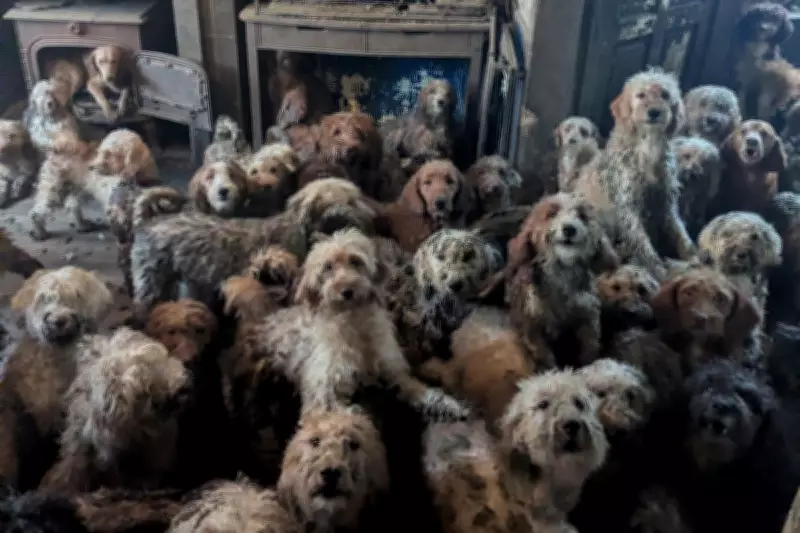
The RSPCA has announced that more than 250 dogs rescued from a severely overcrowded home in the UK are now "doing really well" after a mass rescue operation. A photograph released by the charity showed dozens of poodle-cross dogs crammed into a single dingy room, with their matted and crusted coats causing widespread shock among the public.
Rescue Operation and Initial Conditions
When rescuers arrived at the undisclosed location in January, they found so many dogs that they almost filled the room entirely. The discovery highlighted extreme neglect, with the animals living in conditions that had spiraled out of control. The RSPCA attributed this to "extenuating family circumstances," noting that the situation grew due to the owners' vulnerabilities.
No Prosecution Due to Vulnerable Owners
In a compassionate decision, the RSPCA stated it would not prosecute anyone involved due to the "extremely vulnerable nature" of the owners. This approach reflects the charity's focus on welfare over punishment in cases where human factors play a significant role. The conditions of the dogs and their sheer numbers were described as having escalated during these difficult family circumstances.

Care and Rehabilitation Efforts
Of the 250-plus animals rescued, 87 were taken in by the RSPCA, while the Dogs Trust assumed responsibility for the remainder. Lee Hopgood, the RSPCA's operational superintendent for the North of England, reported to the BBC that despite the matted and crusted coats requiring immediate treatment, the dogs were surprisingly in good health and are now "doing really, really well."
A spokesperson for Dogs Trust added that after receiving necessary care and behavioral support, many of the dogs have been successfully rehomed and "are enjoying life in their forever homes." Some animals remain with Dogs Trust, including those that have given birth since the rescue, ensuring ongoing care and attention.
Personal Adoption Story: Boone's Journey
Dermot Murphy, a former RSPCA inspectorate commissioner, adopted one of the rescued dogs named Boone. He described Boone as underweight with sore ears and eyes upon rescue. Initially, Boone struggled with basic experiences, such as walking on a lead, locking his claws to the floor in confusion.
Murphy explained that settling into life outside the cramped room caused "a bit of a sensory overload" for Boone, necessitating a gradual introduction to new environments. Now, Boone can play off the lead and engage with toys like a ball. "It's just fantastic to see how he's come out of himself and become part of our family," Murphy said, highlighting the positive transformation.
Addressing Misinformation and Broader Issues
The RSPCA also addressed rumors on social media that accused the charity of using artificial intelligence to fake the shocking photograph. A spokesperson firmly dismissed these claims, stating, "We can confirm that AI has not been used to create this image. As much as we wish this image wasn't real, sadly it very much is – and we are being called to more and more multi-animal reports like this."
The charity emphasized that it has countless real stories of neglected animals and does not need to resort to fabrication. They linked such cases to broader societal issues, including mental health struggles, the cost of living crisis, and poor breeding practices, urging increased awareness and support for animal welfare initiatives.