Dolphins Use Baby Talk and Call Each Other by Name, Groundbreaking Research Reveals
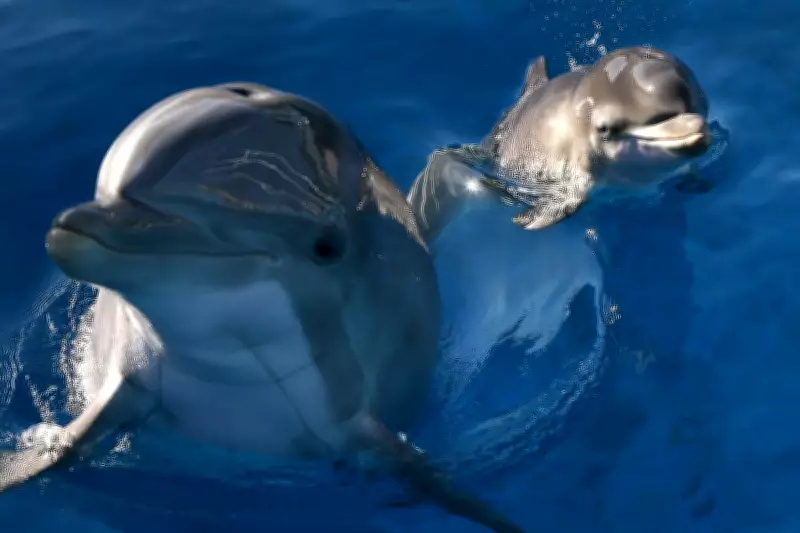
Scientists studying dolphin communication have achieved significant breakthroughs, revealing that these intelligent marine mammals use unique whistles as names and engage in baby talk with their calves. This research, spanning decades, sheds new light on the complex social interactions of bottlenose dolphins.
Historical Context and Foundational Discoveries
Human fascination with bottlenose dolphins dates back thousands of years, but systematic research into their communication only began in the 1960s. Pioneers like John Lilly and the husband-and-wife team of Melba and David Caldwell conducted experiments to decode dolphin sounds. The Caldwells developed methods to record isolated dolphins in captivity, leading to the discovery of the signature whistle – a unique call used by each individual, functioning much like a human name. These whistles help dolphins maintain contact in murky underwater environments where visibility is poor, essentially allowing them to announce their presence.
This foundational work paved the way for further studies. Since the mid-1980s, researchers have documented signature whistles in wild dolphins for the first time, focusing on a resident community near Sarasota, Florida. The Sarasota Dolphin Research Program, led by Randall Wells and involving numerous institutions, has been ongoing since 1970, making it the world's longest-running study of wild cetaceans.

Research Methods and Database Development
In the Sarasota project, scientists have detailed knowledge of approximately 170 dolphins, including their age, sex, and maternal relationships. During brief catch-and-release health assessments, researchers attach suction-cup hydrophones to dolphins' foreheads to record their sounds continuously. This approach confirmed that wild dolphins produce large numbers of signature whistles when isolated, similar to captive animals.
These recordings have been compiled into the Sarasota Dolphin Whistle Database, which now contains nearly 1,000 sessions from 324 individual dolphins, with over half recorded multiple times. Signature whistles are identified by their prevalence, accounting for about 85% of whistles in isolated contexts, and are visualized using spectrograms that plot frequency over time.
Key Findings on Signature Whistles and Communication
The database has yielded rich insights into dolphin communication. Calves sometimes develop signature whistles similar to their mothers, but many do not, raising questions about the factors influencing this development. Once established, signature whistles remain highly stable over a dolphin's lifetime, particularly for females. Males, however, often form strong pair bonds, and their whistles can become more similar over time, a phenomenon still under investigation.
Dolphin mothers modify their signature whistles when communicating with calves by increasing the pitch, akin to human caregivers using higher-pitched baby talk or motherese. Additionally, dolphins initiate contact by imitating another's signature whistle, similar to calling someone by name. Researchers are exploring whether dolphins copy whistles of absent individuals, potentially discussing them, though more evidence is needed to confirm this beyond chance similarities.
Discovery of Shared Non-Signature Whistle Types
An exciting development is the discovery of shared non-signature whistle types used by multiple dolphins. Initially thought to be random, these whistles have been identified in response to underwater playback experiments. So far, at least 20 different shared types have been cataloged, with artificial intelligence potentially aiding future categorization.
Playback experiments, combined with drone filming, suggest these shared whistles may serve specific functions. For example, one type often leads to avoidance of drones, indicating a possible alarm function, while another might express surprise in response to unexpected stimuli. This complexity reflects dolphins' intricate social relationships, where responses vary based on context, such as group dynamics or emotional state.

Implications and Future Research Directions
The main takeaway is that dolphin communication is highly complex, with no one-size-fits-all responses to non-signature whistle types. This mirrors human social interactions, where reactions to being called by name depend on various factors like company or mood. Future work aims to sample more dolphins across diverse contexts, including different ages, sexes, group compositions, and activities.
This ongoing research makes the field both challenging and fascinating, with countless questions about dolphin communication awaiting answers. As scientists continue to explore, each day brings new discoveries about these remarkable creatures and their sophisticated ways of interacting.