
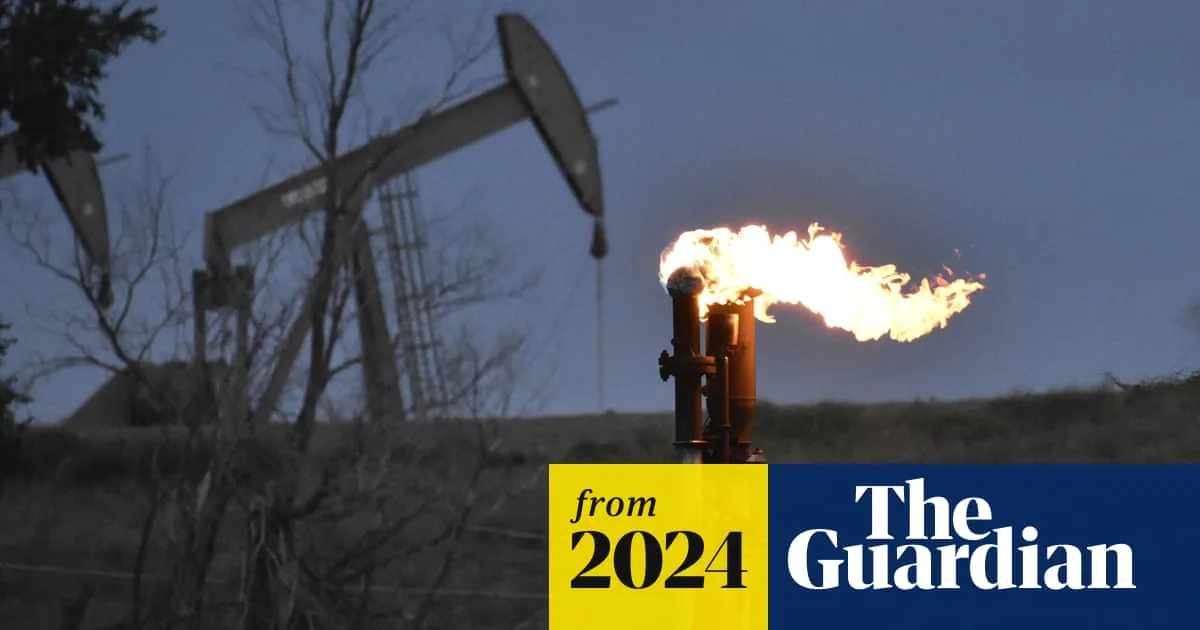
Fossil fuel companies must spend tens of billions of dollars to reduce methane emissions from their operations, or it will be almost impossible to meet global climate targets, the International Energy Agency (IEA) has warned. The US is now the biggest source of methane emissions from oil and gas extraction, while China leads in emissions from coal mining, and Russia remains a major emitter due to poorly run operations.
Leaks from coalmines and oil and gas wells are the largest sources of methane, a potent greenhouse gas responsible for about 30% of temperature increases to date. According to IEA data published on Wednesday, around 170 billion cubic metres of methane were emitted from fossil fuel operations globally last year, exceeding the entire natural gas production of Qatar.
The IEA estimates that $170 billion would be needed to reduce global methane emissions by 75%, with $100 billion required for oil and gas and $70 billion for coal. This spending would be equivalent to about 5% of the profits fossil fuel companies made last year. Many leaks could be easily fixed if best practices from countries like Norway were adopted worldwide.
Despite a pledge from over 200 countries to act on methane, emissions remain near the record high set in 2019. The IEA's Global Methane Tracker found that real-world emissions are far higher than reported. However, better satellite monitoring, including a new system from the Environmental Defense Fund, offers hope for improved detection and action.
Paul Bledsoe, a former climate adviser, urged the US to commit to near-zero methane emissions by the end of the decade. Tim Gould, IEA co-author, noted that the upcoming Cop29 summit in Azerbaijan could spur stronger action, as it will take place in a major oil and gas producer.




