Singapore's High-Tech Cleaning Culture: From Robot Window Cleaners to Self-Cleaning Tables
Singapore is often hailed as the cleanest country globally, where even chewing gum is banned to combat littering. This national commitment to discipline extends into homes and public spaces, with locals and tourists alike marveling at the advanced technology that maintains impeccable tidiness. From small apartments to bustling airports, social media showcases an array of impressive gadgets that redefine cleanliness.
Innovative Home Gadgets Transforming Daily Life
Singaporean influencers have taken to platforms like TikTok to demonstrate their favourite high-tech cleaning tools. Cherie, a popular influencer, uses a "winbot" from ECOVACS, a robot that cleans windows autonomously, sparing her arms from fatigue. She explains, "It does the job for me. I just place it on, press start, and it automatically begins cleaning." This device isn't limited to windows; it also handles bathrooms, glass surfaces, and large mirrors, mapping its own cleaning route for efficiency.
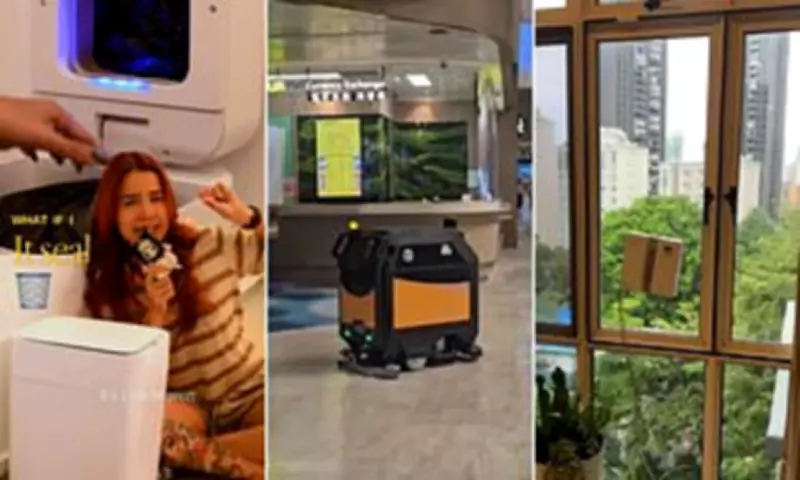
Another resident, Leah, shares a video highlighting her must-have home-tech. Among her favourites is a smart bin with a sensor-operated lid that automatically seals trash bags. While pricey, ranging from £100 to over £200, she considers it "worth it for her sanity." Additionally, a 3-in-1 sink dishwasher from Fotile offers a countertop solution for washing dishes and disinfecting ingredients. Fridge organisers with automatic springs that replace beverages as they're taken out, dehumidifiers to prevent mould, and handheld steamers for furniture cleaning are also staples in Singaporean households.

Public Spaces Embrace Automation for Hygiene
In public areas, the technology becomes even more sophisticated. Creator Manoj Adwani was amazed by a self-sufficient cleaning robot at Singapore's airport, which cleans designated areas, runs on battery, and autonomously returns to a docking station to recharge. Similarly, Channel News Asia reported on "self-cleaning tables" at Nanyang Technological University's food court. These tables, developed by operator Food Haven, feature disposable sheets that are automatically replaced after each use, addressing manpower shortages in maintaining hygiene.
Shane Tay, director of Food Haven, noted, "There's always this struggle of maintaining proper hygiene within the large dining area of food courts because of manpower issues. We are trying to eliminate this dependency on manpower with automation." This innovation allows diners to simply press a button for a fresh table setting after returning their trays.
Historical Roots and Cultural Significance
Singapore's clean reputation is deeply rooted in its history. Public policy academic Donald Low explained to the BBC that after gaining independence from Malaysia in 1965, the government actively promoted cleanliness to attract foreign investment. Prime Minister Lee Kuan Yew believed that physical and governmental cleanliness would set Singapore apart in Southeast Asia. Today, this ethos is ingrained in the culture, with technology playing a key role in sustaining it.
Global Comparisons and Future Trends
Singapore isn't alone in embracing smart living; Japan also showcases innovative cleaning gadgets, such as wall-mounted laundry machines and shoe washers. Professor Scott North of Osaka University highlighted that tidiness is a cultural norm in Japan, taught from childhood and reflected in behaviours like cleaning up after football matches. Futurologist Tom Cheeswright optimistically predicts that advancements in AI and robotics will continue to enhance home lives, driving human progress across industries.
As social media users express awe at these gadgets, comments like "I want everything in this video" and "It would be great if they sold these hygiene products all over the world" underscore a growing global interest. From celebrity endorsements of robot vacuums to AI kitchen appliances, the trend toward high-tech cleanliness is expanding, with Singapore and Japan leading the way in integrating innovation into everyday life.