
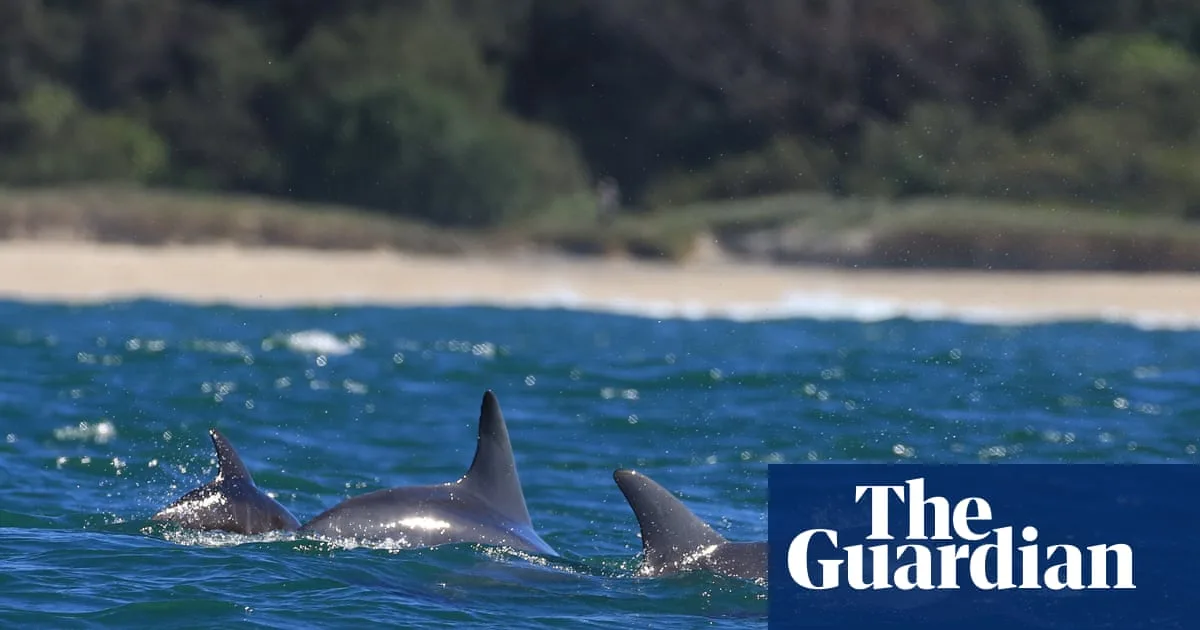
More than 500 citizen scientists took to the seas and coastlines of New South Wales on Saturday for the state's first statewide dolphin census, organised by Dolphin Research Australia and the NSW National Parks and Wildlife Service. Participants counted every dolphin they saw for at least 15 minutes from cliff sides, coastal lookouts, kayaks, boats, or using drones, aiming to fill gaps in knowledge about dolphin populations along the NSW coast.
Dr Elizabeth Hawkins, chief executive of Dolphin Research Australia, said the data collected is crucial for understanding areas important to dolphins and their health. The census focused on photographing dorsal fins, which act like fingerprints due to unique notches and scars, allowing researchers to identify individuals. Hawkins noted that some dolphins in the Byron Bay area have been known to her for over 24 years, highlighting the long-term relationships formed through research.
It is estimated there are between 400 and 500 dolphins in the Byron Bay area alone, but the total number across NSW is unknown. The most common species is the Indo-Pacific bottlenosed dolphin, which forms distinct communities tied to specific coastal areas. Nineteen dolphin and small whale species are found in NSW waters, including seasonal visitors like orcas and short-beaked common dolphins.
Ranger Andy Marshall from the NSW National Parks and Wildlife Service said the census provides a knowledge base for making well-informed decisions about dolphin populations. He observed a community of 40 dolphins socialising in a bay on the mid-north coast, a positive sign indicating healthy conditions. Marshall described dolphins as a 'canary in the coalmine' for marine health, with their presence signalling a healthy environment.
Threats to dolphins include emerging diseases, pollution from runoff, fishing impacts, and climate change. Hawkins said climate change is a major concern for Byron dolphins, affecting current movement, prey availability, and their ability to adapt. The census was supported financially by the NSW state government under the Marine Estate Management Strategy, and results will take at least a month to collate.




