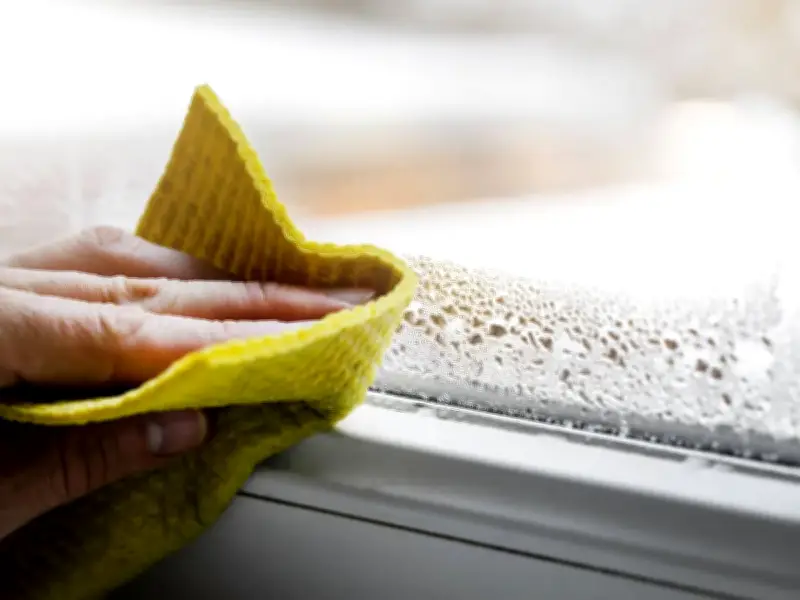
Waking up to wet windows is a familiar frustration for households across Britain as the colder weather sets in. Those droplets appear when moisture-laden air inside the home comes into contact with chilly glass or a poorly insulated external wall. With October temperatures predicted to plummet, the drop in temperature causes water vapour in the air to condense into liquid on the surface, leaving windows and walls damp.
Health and structural risks of damp
While the odd bit of moisture on a bathroom mirror or kitchen window is entirely normal, ongoing surface dampness can result in several serious household and health issues. Damp, organic surfaces including wallpaper, plasterboard, paint and timber create ideal conditions for toxic black mould to flourish.
Mould spores can cause respiratory issues, exacerbate asthma and trigger allergic reactions. Water gathering on windowsills can also cause wooden frames to rot, wallpaper to peel away, paint to lift and plasterwork to deteriorate. Additionally, increased indoor humidity allows dust mite populations to flourish, further worsening allergies and skin complaints.
Damp walls also become cold areas, making your property progressively harder and more expensive to heat, while generating a lingering musty smell.
The viral washing-up liquid hack
Numerous social media influencers regularly share one crucial tip for removing condensation in the home — applying washing-up liquid to your windows. Among those championing the hack is cleaning influencer 'Cleanwithlily', who has amassed nearly 200,000 followers on TikTok, claiming that just 'one thing' each morning is all it takes to rid your home of condensation.
Lily posted a video of a condensation-covered window, posing the question to her followers: "Are you fed up with condensation all over your windows every morning?" She went on to say: "Then before you go to bed tonight, do this one thing and you'll wake up to no condensation in the morning."
Lily disclosed that the only thing required is to apply a small amount of washing-up liquid to a microfibre cloth and buff it thoroughly into the window. "Trust me when I tell you, this is an absolute game-changer," she added. The clip quickly went viral, racking up more than 2,000 likes. One viewer exclaimed: "Need to try this!" While another wrote: "Going to be trying this tonight! My windows are always like this lately and making mould on wall so I will definitely try."
However, a third user sounded a note of caution: "I've heard that the condensation will go somewhere else instead like walls etc and turn into mould is this true? I've no idea. I put small tub of salt next to my windows and that helps. I also open the windows for a good few hours in the morning. Hope I'm doing it right lol."
Why the hack can make problems worse
Applying washing-up liquid to window glass does not eliminate moisture from the room entirely; it simply redirects where that moisture eventually lands. Washing-up liquid works as a surfactant, essentially creating a soap layer on the glass. Rather than water droplets forming into bead-like condensation on cold glass, the soap breaks down the surface tension of the water. Moisture instead spreads out into an invisible, microscopically thin film across the window.
The total amount of water vapour present in your home's air remains completely unchanged. Air holds water vapour until it meets a cold surface. If the glass can no longer pull water vapour from the air into visible droplets, that airborne moisture will move to the next coldest available surfaces in the room, which are usually external walls, window frames and sills, ceilings and upper wall edges.
By suppressing window condensation without addressing the root cause of moisture, you lose an early warning sign. Water collecting on glass can be easily wiped away with a towel or squeegee, removing that moisture from your home completely. Should that moisture instead settle invisibly into plasterboard, paint, or wallpaper, it creates the ideal breeding ground for black mould growth directly on your walls, which is far more challenging to clean and repair than wet glass.
Effective alternative methods
To permanently tackle condensation transferring onto walls or furniture, the emphasis should be on removing or controlling the moisture directly at its source. Wipe down window condensation daily using a squeegee or cloth to clear window moisture into a towel each morning, drawing out litres of water from the indoor air circulation. Increase daily ventilation by opening windows using purge/trickle vents or running background extraction fans to replace warm, moist indoor air with cooler, drier air from outside. Use a dehumidifier, running a compressor or desiccant dehumidifier in central locations or wherever clothes are being dried to draw water directly out of the atmosphere.